
You’re eating more carefully, perhaps moving more, and the scales still aren’t doing what you expected. It’s frustrating, and it’s very common. Often there isn’t one big failing. Sometimes, it’s the smaller things that get in the way. You might skip breakfast, forget about the calories in your drinks, or follow a diet that’s simply too strict to stick with.
Below, we look at 15 common weight loss mistakes and what you can do differently. We’ll also cover a few questions that often come up, including how much weight you might lose in a month, whether weight loss patches actually work, and if diarrhoea can happen while you’re trying to lose weight.
Weight loss common mistakes that slow progress
You don’t need to fix all 15 at once. Try one thing at a time and find what works for you. Read through, spot the two or three that sound familiar, and start there.
1. Expecting fast results
Quick results are tempting, but fast weight loss is hard to sustain. Aim to lose 0.5 to 1kg (1 to 2lb) a week and avoid losing weight suddenly with diets. When the pace feels too slow, people tend to tighten their eating further, and that usually makes the plan harder to keep up.
If you’re considering medical weight-management options instead, it’s important to find a trusted weight loss provider and to have your suitability assessed by an appropriate healthcare professional.
How much weight could I lose in a month?
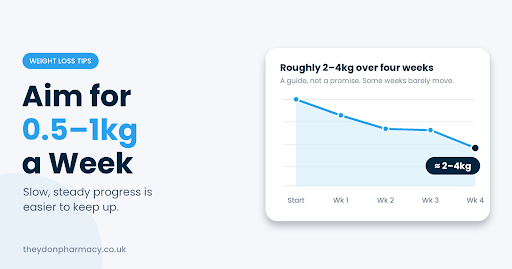
It varies from person to person, depending on your starting weight, age, health, medicines and how your body responds. A steady 0.5 to 1kg (1 to 2lb) a week. Over four weeks, that works out at roughly 2 to 4kg (about 4 to 8lb) if you manage it consistently. Treat that as a guide, not a target or a promise.
Some weeks the scales won’t move at all. Changes in the first week or two can partly reflect fluid rather than fat. A slower, steadier pace is usually easier to keep up.
2. Following crash diets or very restrictive plans
Cutting out whole food groups or eating very little can work for a fortnight. It’s rarely something you can live with for months, and when it ends, old habits tend to return. A plan built on “never” and “banned” also makes ordinary life, such as a meal out or a family birthday, feel like a failure waiting to happen.
Choose changes you could imagine still doing next year. Very-low-calorie diets should only be followed with medical supervision. Please speak to your GP first if you’re pregnant or breastfeeding, have a medical condition, or take regular medicines. If food rules are causing anxiety, guilt or cycles of bingeing and restricting, your GP is the right place to start.
3. Skipping meals
Missing breakfast or lunch to “save” calories often backfires. The NHS warns that skipping meals can leave you snacking more because you feel hungry. A late afternoon biscuit tin is much harder to resist when you’ve eaten very little since morning.
Planning regular meals, with a sensible snack if your day is long, makes it easier to choose well. Hunger is a poor guide when you’re making food decisions at 6pm.
4. Guessing how much you actually eat
Most of us underestimate portions, especially of foods that are easy to pour or nibble. Cooking oil, cereal, rice, pasta, nut butter, cheese and the odd bite while cooking can add up without feeling like “eating”.
For a week or two, try measuring a few of the foods you pour or spoon out most often, or keep a simple food diary. The NHS Better Health weight loss page explains calories and portion sizes in plain terms. Tracking isn’t helpful for everybody, though. If measuring food makes you anxious or you’ve previously struggled with your relationship with food, leave this step out and speak to your GP instead.
5. Forgetting about drinks
Sugary drinks, juice, flavoured coffees and alcohol all contain calories, and they don’t fill you up the way food does. Advice on losing weight is to swap sugary drinks for water, with lemon or lime if you want flavour. Better Health also points out that alcohol can be high in calories and that it’s easy to lose track of how much you’ve had.
You don’t have to cut everything out. Start by replacing the drink you have most often.
6. Judging progress by the scales alone
Body weight moves up and down day to day with fluid, salt, food still being digested and, for some women, the menstrual cycle. A single high reading doesn’t mean you’ve gained fat.
Weigh at the same time of day, no more than once a week if daily readings upset you, and look at the trend over several weeks. Other signs count too: how clothes fit, your waist measurement, your energy and how far you can walk or how much you can lift compared with last month.
7. Overlooking protein and fibre
Filling meals make a calorie deficit easier to live with. Protein and fibre both help you feel fuller for longer, so a plan built on small portions of refined carbohydrate leaves you hungry sooner. Think eggs, fish, beans, lentils, yoghurt or lean meat, plus vegetables, fruit, wholegrain bread, oats and pulses. The NHS suggests aiming for 5 A Day, where 80g of fresh, canned or frozen fruit or vegetables counts as one portion.
Does weight loss cause diarrhoea?
Healthy weight loss doesn’t automatically cause diarrhoea. Bowel changes during a weight loss attempt usually have another explanation, and it’s often related to what has changed in your routine. Examples include:
- a sudden, large increase in fibre
- more sugar-free foods containing sweeteners such as sorbitol, which can have a laxative effect
- a stomach bug
- a new supplement or medicine
The NHS notes that diarrhoea usually stops within 5 to 7 days and that medicines can be a cause, so check the leaflet. Increase fibre gradually and drink plenty of fluids. Speak to a pharmacist or GP if diarrhoea lasts more than 7 days, is bloody, or if you have severe pain, dehydration, or other symptoms that worry you. See the NHS guidance on diarrhoea and vomiting. If you’re losing weight without trying and have ongoing bowel changes, see your GP.
8. Relying on exercise alone, or ignoring movement altogether
Exercise matters for your heart, mood and strength, but it’s easy to overestimate how many calories a session burns and then “reward” yourself with more than you used. Equally, relying on food changes alone ignores something NHS Better Health, Lose Weight highlights: changing what you eat can help you lose weight, while moving more can help you keep it off.
The NHS recommends 150 minutes of activity per week, which can be split into shorter sessions. Ten-minute walks count. Build up gradually and speak to your GP before starting something new if you have a heart condition, joint problems or haven’t been active for a long time.
Not sure where your blood pressure sits before you start? We can check it for you in the pharmacy. Find out more about our blood pressure checking service.
9. Overlooking sleep
NHS Better Health says not getting enough sleep can make it harder to lose weight. Tired people tend to feel hungrier and have less energy to cook or move, so convenience food starts to win.
Try a regular bedtime and wake time, keep screens out of the last half hour, and avoid caffeine late in the day. Alcohol may help you drop off but can disrupt deeper sleep. If poor sleep goes on for weeks, mention it to your pharmacist or GP.
10. All-or-nothing thinking
“I’ve eaten a biscuit, so today’s ruined” is how one slip turns into a week. The same pattern shows up as very strict weekdays followed by a weekend that cancels everything out.
Aim for consistency, not perfection. One off-plan meal barely registers on a weekly scale, but several in a row might. Decide in advance what a “good enough” day looks like and get back to your normal pattern at the next meal.
11. Looking for a quick fix in a patch, tea or supplement
Slimming teas, detox products, laxatives and patches promise effort-free results. None replaces eating and activity changes. Laxatives and diuretics don’t reduce body fat; they mainly cause fluid loss and can lead to dehydration and bowel problems.
Do weight loss patches work?
There’s no reliable evidence that weight loss patches work,k and they shouldn’t be treated as a substitute for evidence-based weight management. They’re usually sold as supplements or consumer products rather than licensed medicines, which can lead to common mistakes. Some are marketed using language borrowed from prescription treatments, which can be misleading.
If a product’s claims sound too good to be true, ask a pharmacist before buying it. Report any suspected side effects through the MHRA Yellow Card scheme.
You’re welcome to bring the product into Theydon Bois Pharmacy, or call us on 01992 812130, and one of our pharmacists will give you an honest view before you spend your money.
12. Not adjusting when progress slows
Plateaus are normal. A smaller body needs less energy than a larger one, and portion sizes tend to creep back up after a few months. Sticking rigidly to what worked in week two doesn’t guarantee it will work in week twenty.
Before you cut calories further, review honestly for two weeks: portions, drinks, snacks, weekends, and activity. Our article on why you may be struggling to lose weight in a calorie deficit goes into this in more detail. Slashing food intake in response to a plateau tends to make things harder, not easier.
If you’ve reviewed things honestly and you’re still stuck, that’s a good time to book a weight loss consultation with us. We’ll look at what’s changed and talk through your options.
13. Not considering medicines or health conditions
Some medicines and medical conditions can affect appetite, fluid balance or body weight. An underactive thyroid is one example. If your weight has changed noticeably after starting a new medicine, or you’re gaining or losing weight without trying, don’t ignore it.
Talk to your pharmacist or GP. Don’t stop or change a prescribed medicine on your own. Significant unexplained weight loss, or rapid unexplained weight gain, should always be checked by a GP.
If you think one of your medicines could be affecting your weight, ask us. We can go through your medicines with you in our private consultation room and let you know if it’s worth raising with your GP.
14. Overlooking stress and emotional eating
Better Health notes that eating habits, sleep, activity and how you feel can all play a part in preventing weight loss common mistakes. If you reach for food when you’re stressed, bored or low, willpower alone often isn’t enough.
Notice when it happens. A pause of ten minutes, a short walk, a phone call or a cup of tea sometimes breaks the pattern. Sharing your plan with someone you trust can help too, and the NHS suggests this for tough days. If eating feels out of control or distressing, speak to your GP.
15. Trying to manage everything alone
Plenty of people try for months or years on their own before asking anyone for help. Support can make a real difference, whether that’s a GP, a pharmacist, a weight loss management clinic or a local programme.
When should I consider professional weight-management support?
Consider speaking to a GP, pharmacist or other healthcare professional if:
- you’ve made steady changes for a while and progress has stalled
- you have a weight-related health condition, such as high blood pressure or type 2 diabetes
- you take medicines that might affect your weight
- you’d like structure, accountability or regular check-ins
- your relationship with food feels difficult or stressful
Theydon Bois Pharmacy is a community pharmacy, and our Weight Loss Clinic Essex offers one-to-one consultations that include a health review, a discussion of your goals and follow-up appointments. Whether any treatment is suitable depends on your individual circumstances and an assessment by a healthcare professional. Some treatments are prescription-only and aren’t right for everyone.
What are the best weight loss tips?
The best tips are the unexciting ones you can keep doing. In short:
- Make one change at a time rather than overhauling everything.
- Eat regular meals built around protein, vegetables and wholegrains.
- Swap sugary drinks for water and keep an eye on alcohol.
- Aim for 150 minutes of activity a week, in whatever chunks suit you.
- Protect your sleep and ask for help if you stall.
Small, steady changes add up
Sustainable weight loss rarely comes from one dramatic change. It comes from realistic habits you can keep up through busy weeks, social events and the odd slip. It’s also hard, and wanting support isn’t a sign you’ve failed.
If you’d like to talk through your own situation, our team offers weight loss support in Epping, Loughton, Chigwell, Buckhurst Hill and surrounding areas of Essex. A consultation is a chance to review your health, your goals and your options with a healthcare professional. It doesn’t commit you to any particular treatment, and we will protect you from common weight-loss mistakes.
When you’re ready, you can book a weight loss consultation online or call us on 01992 812130 to talk things through with the team at Theydon Bois Pharmacy.
FAQ
What are the most common mistakes when trying to lose weight?
The most common are expecting fast results, following very restrictive diets, skipping meals, underestimating portions and drinks, relying on scale weight alone, and not allowing for sleep, stress or medicines. They’re usually habits rather than character flaws, and most can be adjusted one at a time.
How much weight could I lose in a month?
It varies between individuals. The NHS recommends aiming for a steady 0.5 to 1kg (1 to 2lb) a week, which would be roughly 2 to 4kg over four weeks if sustained. This isn’t a guarantee and some weeks may show little or no change.
Do weight loss patches work?
There’s no reliable evidence that patches marketed for weight loss work. They’re not a substitute for evidence-based approaches such as changes to eating and activity, and the claims on some products can be misleading. If you’re unsure about a product, ask a pharmacist.
Can losing weight cause diarrhoea?
Not usually on its own. Bowel changes can come from diet changes, sweeteners, a stomach bug, supplements or medicines. The NHS advises seeking help if diarrhoea lasts more than 7 days or is bloody. See your GP if you’re also losing weight without trying.
Why am I not losing weight even though I’m in a calorie deficit?
Portion sizes and drinks are often underestimated, and weight can fluctuate with fluid. A smaller body also needs less energy, so a deficit that worked at first may narrow over time. Medicines or health conditions can play a part too. Review honestly for two weeks and speak to a GP or pharmacist if you’re stuck.
When should I speak to a healthcare professional about my weight?
Consider it if progress has stalled despite steady effort, you have a weight-related health condition, you take medicines that may affect weight, your weight has changed without explanation, or food feels stressful.