

If you want to know how to clean your ears, the safe answer is simple. Wipe the outer ear with a soft, damp cloth and leave the inside alone. Your ears clean themselves. Wax protects the ear canal and normally moves out on its own.
Many people reach for cotton buds, ear candles or a bulb syringe. These can push wax deeper or hurt your ear, and some can damage your eardrum. This guide shows you how to clean your ears safely, what never to put in your ears, and when to see a professional. We are a pharmacy in Theydon Bois, and we help people in Epping and across Essex with blocked ears.
How Do You Clean Your Ears Safely?
You do not need to clean inside your ears. Wipe the outer ear with a soft, damp cloth, then dry it gently. Nothing needs to go into the ear canal.
If wax builds up and your ear feels a little blocked, ear drops can help soften it. The NHS advice on earwax buildup is to use 2 to 3 drops of olive or almond oil in the affected ear, 3 to 4 times a day, for 3 to 5 days.
If your ear is still blocked after 5 days of drops, or you cannot hear properly, ask us or your GP. Please do not keep using drops for longer.
Do not use almond oil if you have a nut allergy. Do not use drops if you have, or think you have, a perforated eardrum, or if your ear is painful or leaking, until a clinician has checked it.
What Causes Earwax Buildup?
Your ears make wax to protect the ear canal. It usually moves out on its own, but not always. A narrow ear canal, extra hair, skin conditions or swelling can make buildup more likely. Hearing aids and other in ear devices can also make it worse.
I see the same thing most weeks in our Theydon Bois clinic. Someone arrives with one ear fully blocked. They are often a hearing aid wearer, or someone who uses cotton buds every day, and the wax has built up or been pushed deep into the ear.
What Should You Avoid When Cleaning Your Ears?
Keep fingers, hairpins, ear picks and anything small and pointy out of your ears. These can hurt the soft skin inside the ear canal or damage the eardrum.
Why Do Cotton Buds Make Earwax Worse?
Cotton buds are the classic mistake. The ear canal is narrow, so a cotton bud often pushes wax deeper instead of taking it out. NICE guidance on earwax and the NHS both advise against putting cotton buds or any small object into the ear canal.
Are Ear Candles Safe?
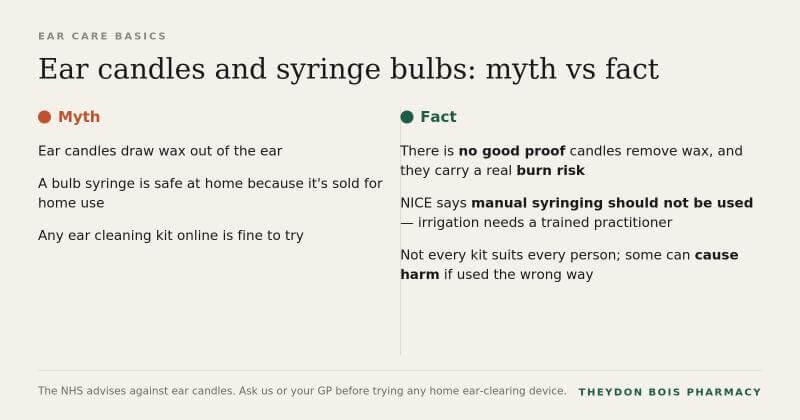
No. There is no good proof that ear candles remove earwax. The NHS warns that they carry a real risk of burns, so please do not use them.
Are Ear Syringe Bulbs Safe?y
This question comes up a lot. Many people ask us about using a bulb syringe to flush out wax themselves. It sounds simple, but it needs real care.
NICE recommendations on ear irrigation say that manual syringing should not be used. Ear irrigation should only be done by a trained practitioner, who knows when it is not safe to do it.
A rubber bulb syringe is not safe just because it is sold for home use. Ask us or your GP before you use one.
Is It Safe to Clean Out Earwax at Home?.
Sometimes, yes. Mild wax buildup can often be sorted at home with drops and a little patience. Our guide on how to remove stubborn ear wax at home explains the softening steps in full.
Home care is not right for everyone. See your GP first, rather than booking wax removal with us, if you have any of these: ear pain, discharge or bleeding, a known or suspected perforated eardrum, grommets, previous ear surgery, or an ear infection now or in the last six weeks. We would not treat you on the day in any of these cases, so a GP visit saves you a wasted trip.
Be careful with ear cleaning kits sold online. Not every kit suits every person, and some home devices can cause harm if used the wrong way. Please do not put anything into your ear canal, however easy it looks in an online video.
When Should You Get Urgent Medical Advice?
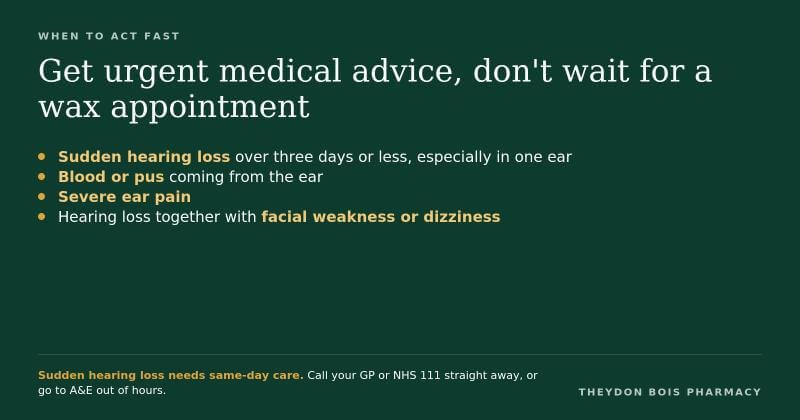
Some symptoms are not a wax problem. Do not wait for a wax appointment if you have any of these:
- Sudden hearing loss over three days or less, especially in one ear
- Blood or pus coming from the ear
- Severe ear pain
- Hearing loss together with facial weakness or dizziness
Sudden hearing loss needs to be seen the same day. Call your GP or NHS 111 straight away, or go to A&E if it is out of hours. It can often be treated, but only if it is seen quickly.
Also speak to your GP if you keep getting ear infections, hear new or unusual ringing in your ears, or feel dizzy.
When Should You Have Earwax Removed Professionally?
If earwax is affecting your hearing or causing symptoms, and home care has not worked, it is time to have it looked at properly. NICE recommends professional removal when wax affects hearing, causes symptoms or makes it hard to examine the ear. Depending on your case, that could mean microsuction or electronic irrigation.
Some GP practices and local NHS services also remove earwax, but this depends on where you live. Here at Theydon Bois Pharmacy, we offer a private microsuction service that covers Epping and the wider Essex area. You can read about our microsuction ear wax removal clinic in Essex on our service page.
What Happens During Professional Earwax Removal?
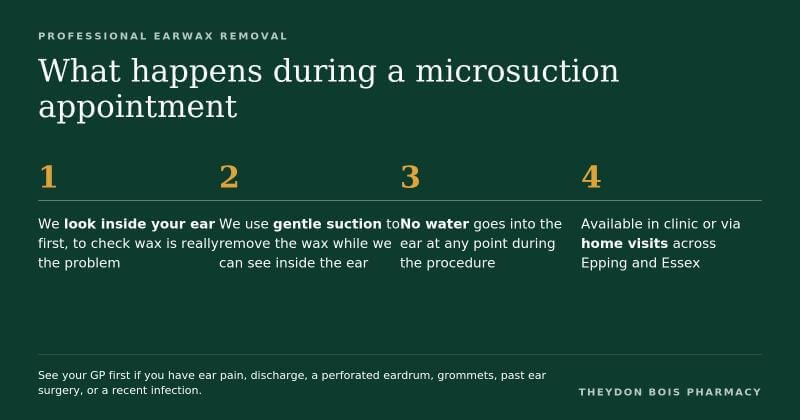
We start by looking inside your ear. This checks that wax is really the problem, so we do not just guess.
We remove earwax with microsuction, here at Theydon Bois Pharmacy. This is a professional earwax removal service in Epping. We also offer ear wax removal at home visits across our coverage area.
Microsuction uses gentle suction to remove wax while we can see inside the ear. No water goes into the ear at any point. Whether it is right for you depends on our check first.
How Can You Prevent Earwax Buildup?
You cannot stop your ears making wax, and you would not want to. Wax has a protective job to do.
What you can do is avoid the things that make buildup worse. Keep cotton buds and other objects out of your ear canal. If your ears keep getting blocked, ask us or your GP whether a softening treatment could help.
There is no set schedule that suits everyone. Some people never need professional removal. Others need it more often, especially if they use hearing aids or other in ear devices.
Where Can I Get Earwax Removed in Essex?
If home care has not worked, you can have earwax removed in Essex by our team. We offer a private, paid microsuction service in Epping.
You can visit the clinic or ask for a home visit. Our ear wax removal at home visits cover Theydon Bois, Epping, Loughton, Chigwell and Buckhurst Hill. We also cover wider Essex, depending on distance.
Ready to book? You can book an ear wax removal appointment online.
Quick Summary: How to Clean Your Ears Safely
Most ears do not need cleaning inside. Earwax is part of your ear’s natural protection. Cotton buds and other objects often make a blockage worse, not better.
If you have mild buildup, drops may be all you need. If your ear stays blocked, your hearing changes, or you are not sure that wax is the cause, a professional check is the safer choice.
If you are in Epping or anywhere in Essex, you can book an ear wax removal appointment with us, and we will check your ears and advise on the right treatment.
FAQs About Cleaning Your Ears and Earwax Removal
What is the best way to clean your ears?
For most people, the best way is to leave the ear canal alone. Wipe the outer ear with a soft, damp cloth and dry it gently. If wax is causing a blockage, ask us or your GP about softening drops or professional removal.
Are cotton buds safe for cleaning your ears?
No. Cotton buds usually push wax deeper instead of taking it out, and they can hurt the ear canal or the eardrum. The NHS and NICE both advise against putting cotton buds or any small object into your ear.
Are ear candles safe?
No. There is no good proof that ear candles remove earwax, and the NHS warns that they can cause burns. Please do not use them. If your ear feels blocked, ask us or your GP for safe advice.
Can I use an ear syringe bulb at home?
Please do not assume it is safe just because it is sold for home use. NICE says manual syringing should not be used, and irrigation should only be done by a trained practitioner. Ask us or your GP first.
How do I know if earwax is impacted?
A blocked or full feeling, muffled hearing, earache or ringing in the ear can all point to earwax buildup. These signs can have other causes too, so an ear check may be needed to confirm that wax is the problem.