

Can sleep affect weight loss? It may. Poor sleep may change what you eat and how much energy you have to move. Most healthy adults need around 7 to 9 hours of sleep a night. Sleep is one piece of the puzzle, not a quick fix.
Ever noticed how a rough night makes the biscuit tin look much friendlier? You are not imagining it. Sleep and weight loss may be linked. NHS Better Health says too little sleep can make losing weight harder.
Weight is never down to one thing. Food, movement, health, medicines and stress all play a part. Sleep is just one piece.
We are the team at Theydon Bois Pharmacy. We help people across Epping, Loughton, Chigwell and the rest of Essex. Here is what sleep may do to your appetite, how much sleep you need, and what you can try.
How sleep and weight loss may be connected
NHS Better Health lists a few ways poor sleep may get in the way. You may pick foods high in calories more often. You may feel too tired to exercise or cook. Your mood and behaviour can change too.
Sleep alone is not known to cause weight gain. Nobody can promise that better sleep means weight loss.
Link or cause?
Two things can show up together without one causing the other. That is what a link means. NHS Better Health says eating habits, sleep, activity and how you feel can all play a part. So one thing rarely explains it all.
Sleep, hunger and food choices

Feeling tired and wanting to snack often go together. The NHS says longer-term sleep problems may affect your mood and appetite. NHS Better Health adds that poor sleep may nudge you towards foods high in calories.
What about ghrelin and leptin?
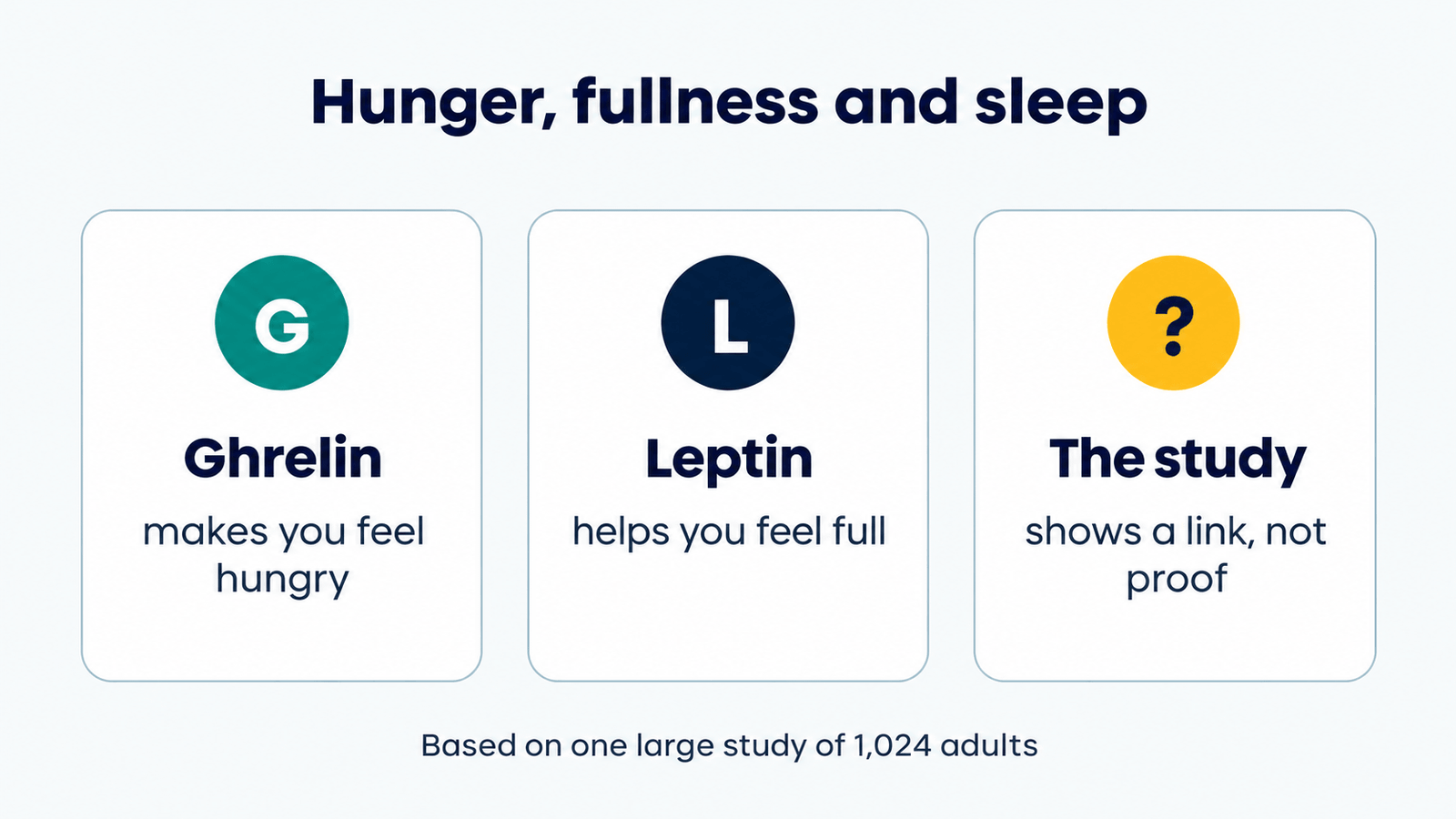
Ghrelin is a hormone, made mostly in the stomach, that makes you feel hungry. Leptin helps you feel full. One large study looked at 1,024 adults. People who slept 5 hours had about 15% more ghrelin than those who slept 8 hours. They also had about 15% less leptin. That mix could leave you feeling hungrier.
The study shows a link, though, not proof that short sleep causes weight gain.
Tired brain, tricky choices
Picture the evening after a bad night. Cooking feels like a chore, and the takeaway menu is right there. NHS Better Health notes that poor sleep may leave you too tired to cook healthy meals.
The British Dietetic Association (BDA) suggests aiming for three balanced meals a day. The BDA also suggests a food and mood diary for three to seven days. It can show how time of day and mood shape what you eat. Try adding a note on how tired you felt.
How much sleep may support weight management?
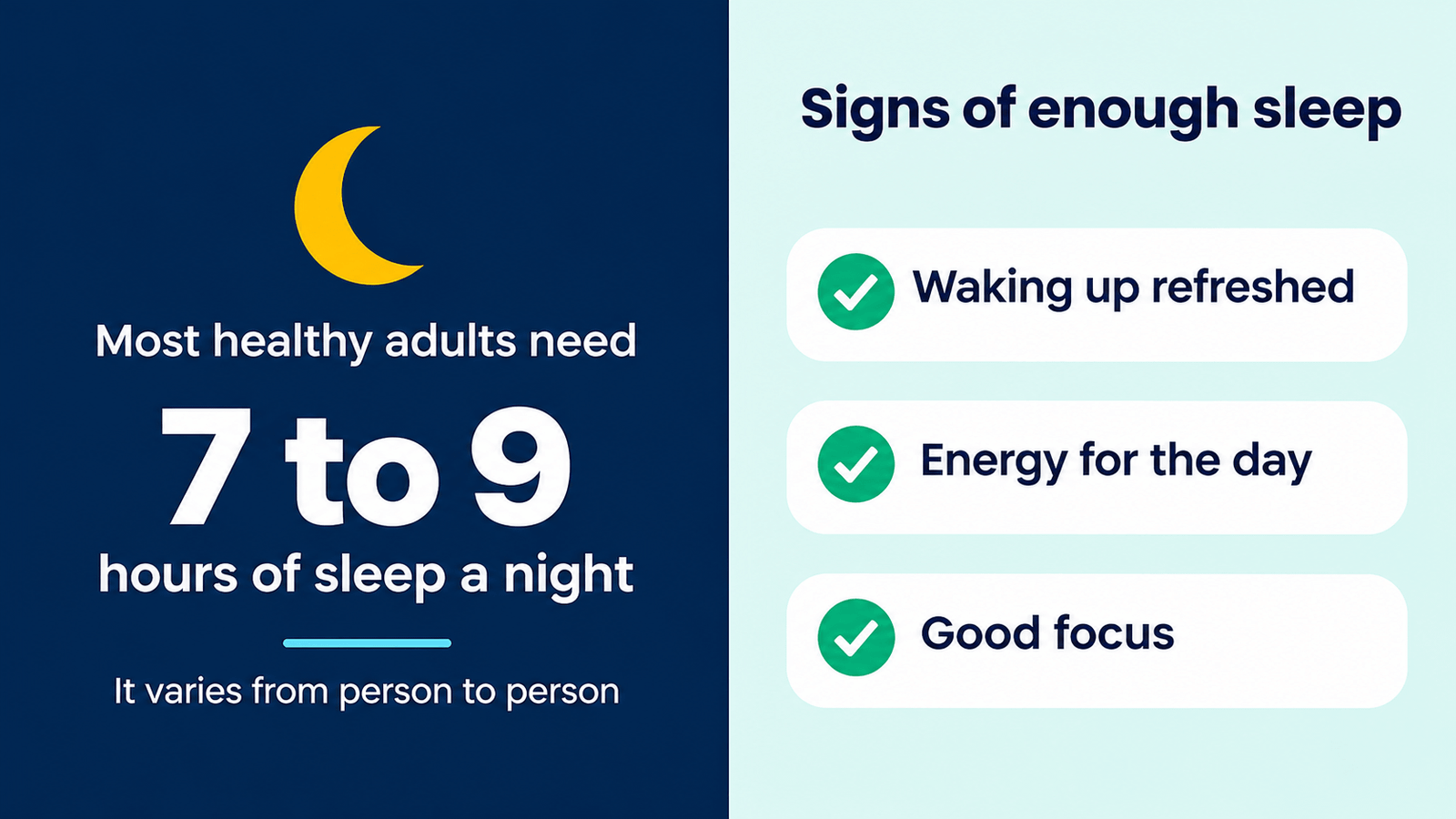
According to NHS Every Mind Matters, most healthy adults need around 7 to 9 hours of sleep a night, though it varies from person to person. Age, health and daily routine all play a part.
There is no separate target for weight loss. Think of 7 to 9 hours as a guide, not a rule.
A good sign is waking up refreshed, with enough energy and focus for the day. You may not be getting enough if you struggle to wake up or feel very tired. Feeling irritable or finding daily tasks hard can be signs too.
Build a sleep routine that works for you.
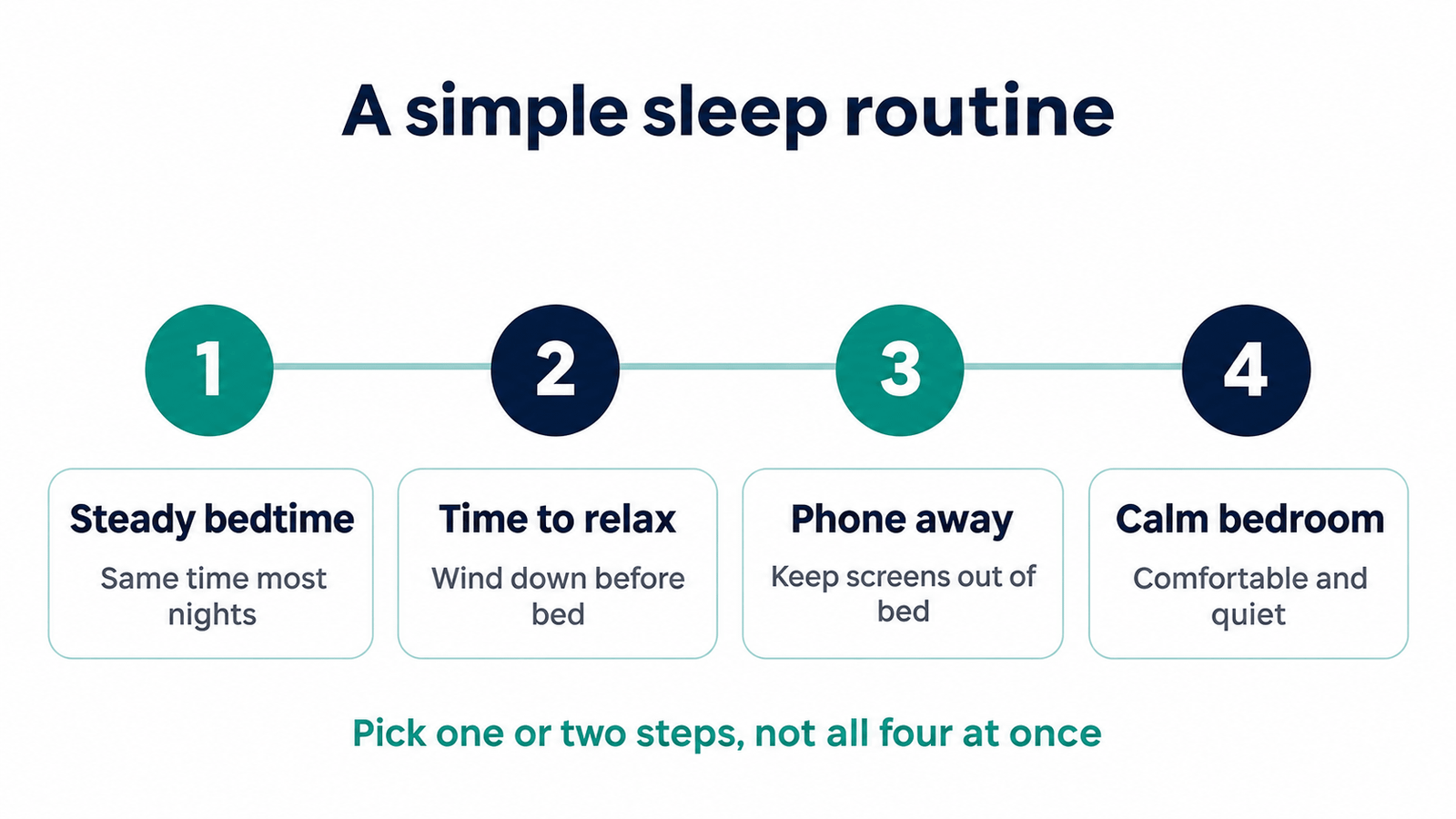 Sleep problems can take time to improve, so go gently. Pick one or two ideas, not ten. A simple routine you can keep beats a perfect one you drop by Thursday.
Keep a steady rhythm.
- Go to bed and get up at around the same time each day.
- Leave some time to relax before bed.
Set the scene
- Make your bedroom comfortable and put your phone away.
- Try a warm milky drink or herbal tea.
Mind what you eat, drink and do
- The NHS recommends avoiding smoking, alcohol, tea and coffee for at least 6 hours before bed.
- Heavy meals can disturb sleep.
- Alcohol may feel relaxing but can lead to poorer sleep later in the night.
- Daytime activity can help. The NHS advises no exercise in the 4 hours before bed, so aim for mornings or early afternoon.
When life gets in the way
Shift work, travel and illness can all upset your sleep. On those days, do not chase perfection. A calm evening and regular meals are enough.
Sleeping better also counts as progress. The BDA lists it among the wins the scales will not show. For other habits worth a second look, read our guide to weight loss common mistakes.
A simple example
Imagine someone who has cut their portions sensibly but works shifts. They sleep 5 or 6 hours and find the evenings are where the plan slips. In a weight loss consultation, we would look at their sleep and routine alongside their food, not just the food.
When tiredness may need medical advice
A few bad nights are usually nothing to worry about, says the NHS. If poor sleep happens often, it can affect how you feel and cope.
The NHS says to see a GP if:
- changing your sleep habits has not helped
- you have had trouble sleeping for months
- poor sleep is making it hard to cope day to day
- you think you may have insomnia
Tiredness has many possible causes. A GP or dietitian can look at your whole picture. Menopause or perimenopause can also disturb sleep, and a GP can talk through your options.
Some medicines can affect sleep. We cannot diagnose sleep problems, but our pharmacists can check whether any of your medicines might be affecting your sleep.
NHS Better Health also says to speak to a GP or healthcare professional before you change your lifestyle. This matters if you have a medical condition, a special diet or an eating disorder.
If you would like to look at your general health too, you can ask our team about private blood testing. It does not replace seeing your GP.
How our weight loss service can support you
Sleep is one piece of the puzzle. Food, movement and support still matter, so please do not treat sleep as a quick fix.
Our pharmacist-led weight loss clinic in Essex starts with a one-to-one consultation. We look at your health history, your medicines and your goals. Follow-up appointments mean your plan can change as you go. Whether any treatment is suitable is decided individually after a full assessment, and some treatments will not be right for everyone.
Next steps
Start small. For one week, notice how you sleep and what you eat. Then pick one change, like a steadier bedtime. If tiredness drags on, speak to your GP.
If the scales still will not move, read about struggling to lose weight in a calorie deficit.
Want to talk through your sleep, eating and weight goals? Book a weight loss consultation online [Setmore weight loss link, confirm pre-selected staff member] with our team, or call us on 01992 812130. You will find us at 10 Forest Drive, Theydon Bois, Epping, Essex, CM16 7EY.
Frequently asked questions
Can poor sleep affect weight management?
It may. NHS Better Health says not getting enough sleep can make weight loss harder. You might choose foods high in calories. You might feel too tired to exercise or cook. That points to a link, not proof that sleep alone causes weight gain.
How much sleep should I get to support weight loss?
Most healthy adults need around 7 to 9 hours of sleep a night, though it varies from person to person. There is no separate target for weight loss. A good sign is waking up refreshed, with enough energy and focus for the day.
Can lack of sleep make me feel hungrier?
Possibly. In one large study, people who slept 5 hours had more of the hormone that makes you hungry. They also had less of the one that helps you feel full. Regular, balanced meals may help.
What should I do if tiredness is affecting my eating habits?
Start small. Try regular meals and a food and mood diary. Then change one sleep habit at a time. If tiredness continues, or you are worried, speak to your GP or another suitable health professional.
Does Theydon Bois Pharmacy offer a weight loss clinic in Essex?
Yes. Our pharmacist-led weight loss clinic in Essex starts with a one-to-one consultation. We look at your health history, your medicines, and your goals. Follow-up appointments mean your plan can change as you go.