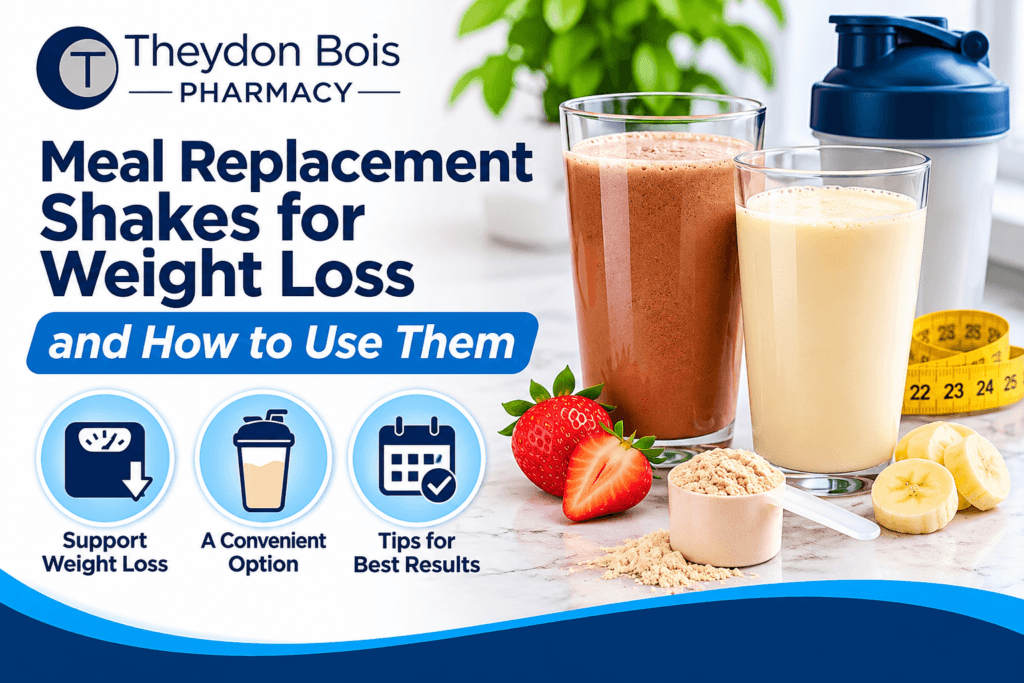
Meal replacement shakes may help with short-term weight loss, but they aren’t suitable for everyone and shouldn’t be treated as a complete weight loss plan. At the Theydon Bois Pharmacy weight loss clinic, I assess each person first to make sure the approach is appropriate for them.
Do meal replacement shakes work for weight loss?
For a short while, they can. That is the honest answer. Many people we speak to lose a little weight at first.
The NHS page on very low calorie diets says they can bring short-term weight loss. It also says most people gradually put weight back on after coming off.
People reach for shakes because they want clear rules and a fast start. I understand that. A clear start helps, but a clear plan for the end matters more.
Perhaps the weight came back after your last attempt. That is common, and it can come from one of the common weight-loss mistakes we see often.
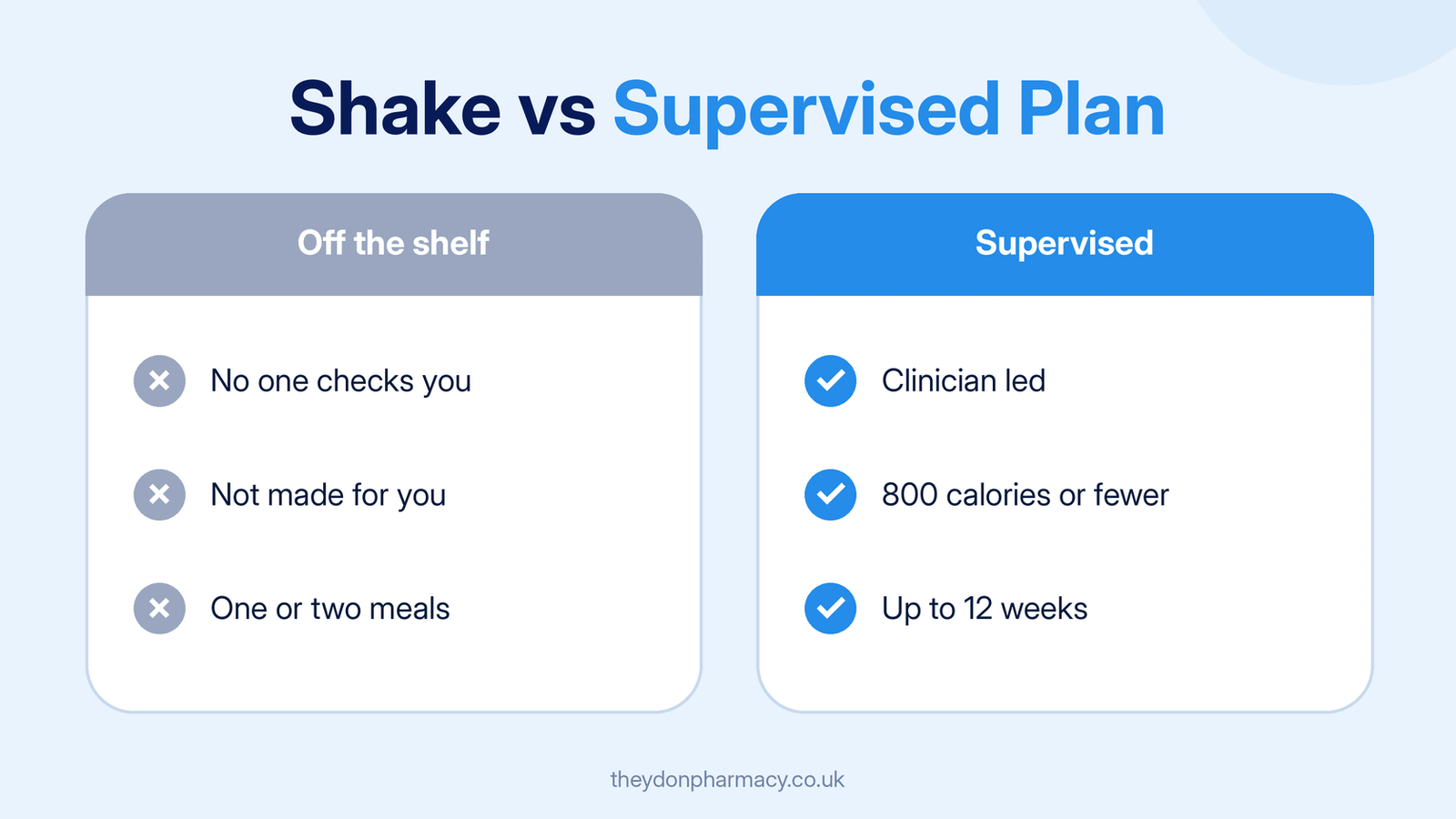
A very low calorie diet (VLCD) is a plan of about 800 calories a day or fewer. It usually swaps normal food for shakes, soups or bars. It is supervised by a clinician.
The NHS says a VLCD needs medical supervision. The limit is 12 weeks in a row.
Meal replacement for weight loss can mean two very different things. One is a medically supervised total diet replacement. The other is to shake off the shelf for one or two meals a day.
Off-the-shelf shakes are not a supervised programme. No one checks whether they suit you. The label cannot know your medicines or your health.
Most people do not need a VLCD. The NHS does not routinely recommend them without a medical need. They can also be hard to follow, with hunger and low energy.
They may not be nutritionally complete. They also give far fewer calories than most people need to keep a healthy weight.
That is why we start with a conversation, not a product. You can see how we work on our weight loss clinic Essex page.
What we see in clinic: the shake is rarely the problem
People often tell us they have already tried shakes. Usually it was breakfast and lunch. They lost a little weight at first.
Then the shakes ran out, or got boring. Normal meals came back and the weight crept back with them.
What most of them were missing was not a better shake. It was a plan for the meals after the shakes.
If this sounds like you, please do not blame yourself. Weight loss shakes were never meant to do the whole job. The gap was the plan, not your willpower.
I would rather you started with the plan, not another box of shakes.
How to choose the best meal replacement shakes

There is no single best shake. I will not name or rank brands, because the right choice depends on you.
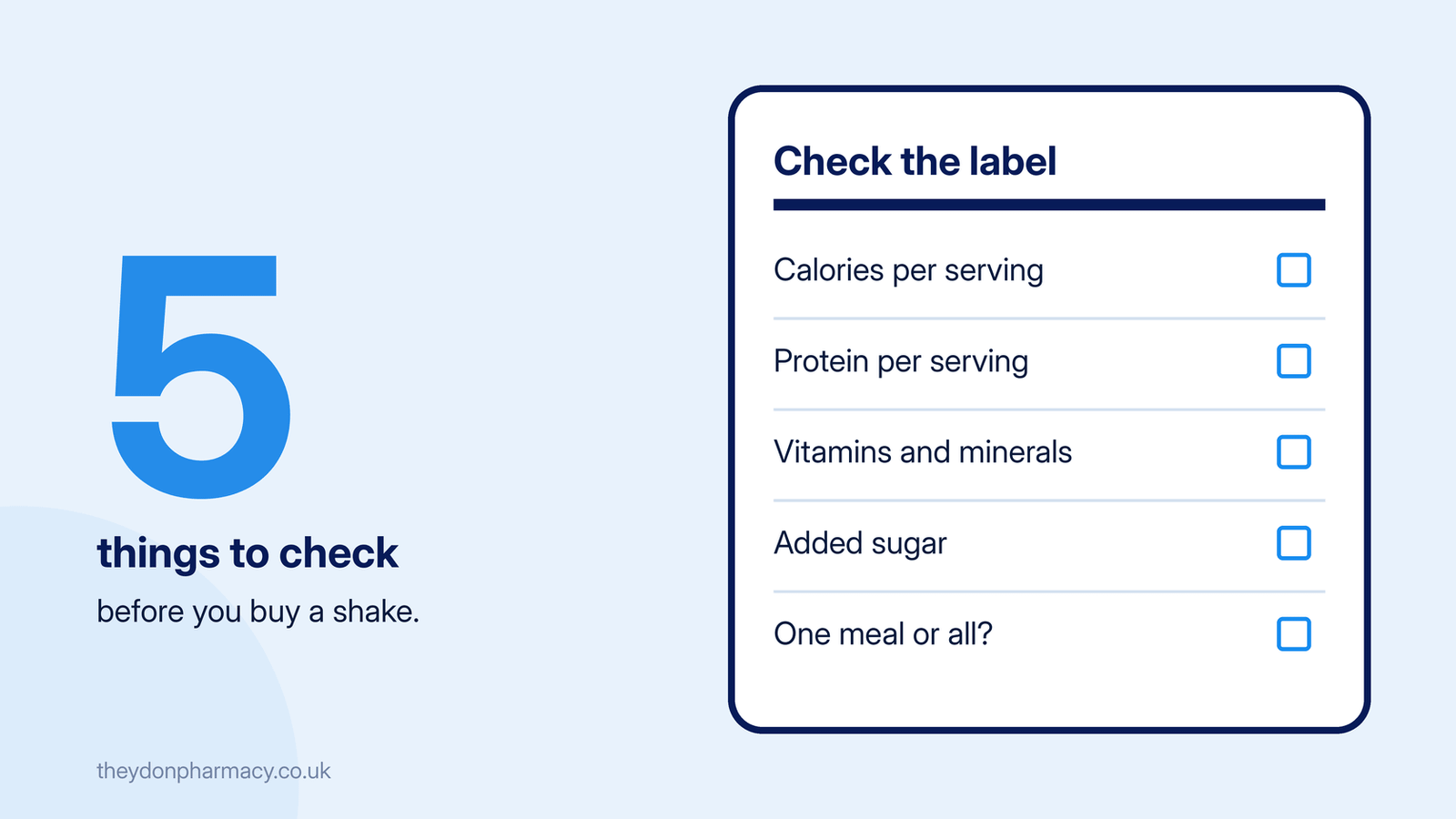
Read the label and check these five things:
- Calories per serving: this tells you how much of a meal the shake replaces.
- Protein per serving: so you can compare one product with another.
- Vitamins and minerals: the NHS warns that very low-calorie plans may not be nutritionally complete.
- Added sugar: check the grams per serving, then ask if it fits your plan.
- Purpose: is it meant to replace one meal, or all of your food? These are different products.
If a label is vague about any of these, I would leave it on the shelf. Good meal replacement drinks make the answers easy to find.
If you are looking at weight loss shakes for women, the same checks apply. So does the same advice: get your own check first.
Who should not use meal replacement shakes?
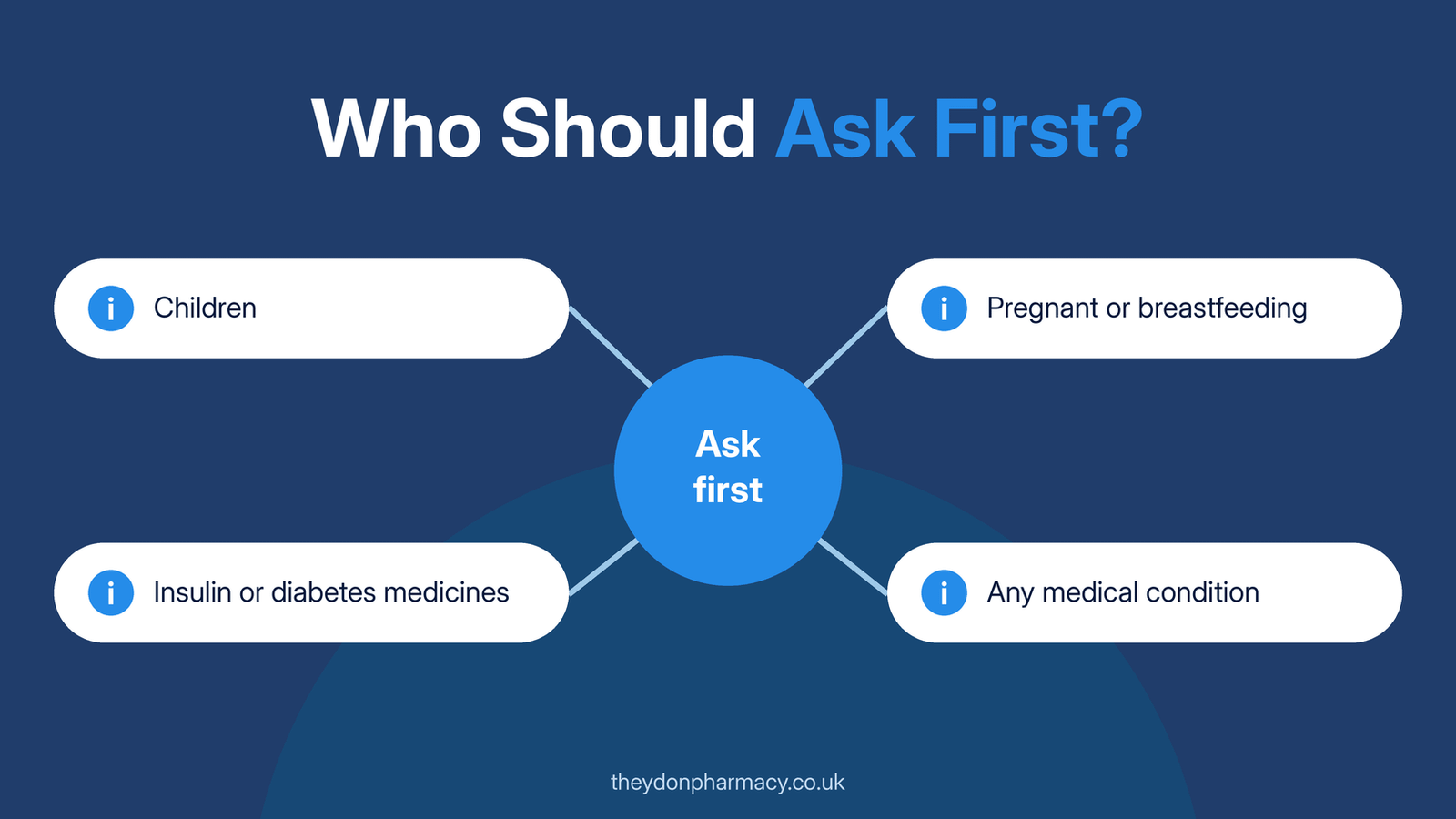
Some people should not start shakes or very low calorie plans without advice. Please speak to a pharmacist or your doctor (GP) first if any of these apply:
- Children
- People who are pregnant or breastfeeding
- People taking insulin or some diabetes medicines, because of the risk of low blood sugar
- Anyone with a medical condition who has not yet spoken to a clinician
A pharmacist or doctor should assess you as an individual. I do that in clinic and a shake-based plan will not suit everyone.
What happens when you stop meal replacement shakes?
The NHS says very low calorie diets are not a long-term way to manage weight. They should only be one part of a wider plan.
So plan the end before you begin. Decide what you will eat on the day after the last shake.
You can read the NHS weight loss plan alongside any advice from us. Shakes can be one tool in that plan. They should never be all of it.
In the clinic, I ask what a normal week of meals looks like for you. Then we build the plan around it.
Three things to settle before you buy shakes
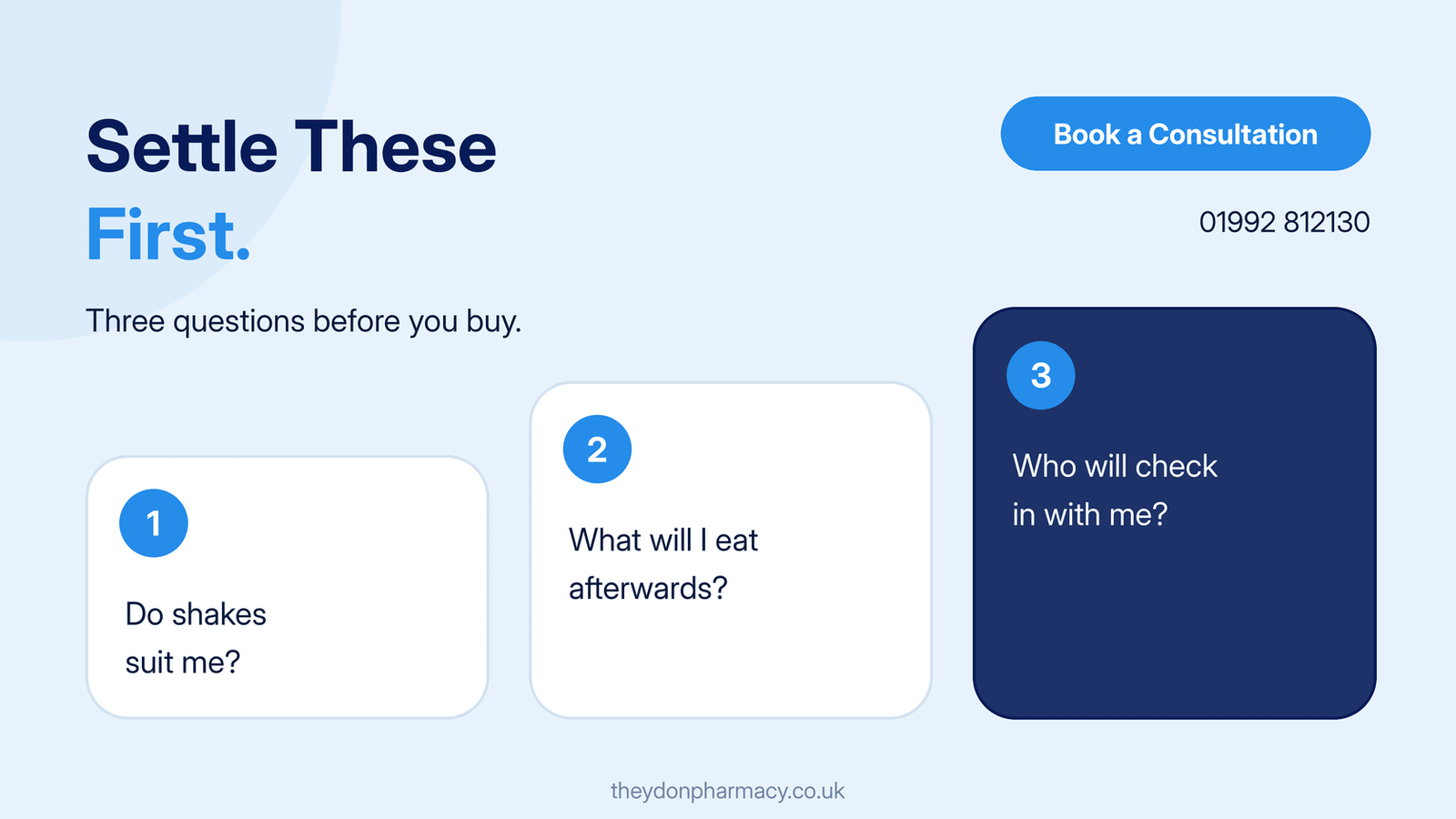
Before you spend any money, answer these three questions:
- Do shakes suit me? Ask a pharmacist or doctor, especially if you take medicines or have a medical condition.
- What will I eat afterwards? Write down the meals you will eat after the last shake.
- Who will check in with me? Someone to check in with helps when the shakes get boring.
If you cannot answer all three yet, wait. A short delay costs less than starting without a plan.
Book an individual check before you start meal replacement shakes
If you are thinking about meal replacement shakes, come and see me first. I will check whether they suit you. Then we will plan the meals that come after.
Use this link to Book An Appointment today. You can also call us on +44 1992 812130. We are at 10 Forest Dr, Theydon Bois, Epping CM16 7EY.
FAQs About Meal Replacement Shakes
Are meal replacement shakes good for weight loss?
They can help some people lose weight for a short while. The NHS says very low calorie diets should only be part of a wider plan. I agree, so we always look at the meals around the shakes.
Who should not use meal replacement shakes?
Children, people who are pregnant or breastfeeding, and people taking insulin or some diabetes medicines. The risk with insulin or some diabetes medicines is low blood sugar. Anyone with a medical condition should speak to a clinician first.
Can I replace all my meals with shakes?
Very low calorie diets usually replace normal food with shakes, soups or bars. The NHS says they need medical supervision and a limit of 12 weeks in a row. Please speak to us before you try anything like this.
Will the weight come back after I stop?
The NHS says most people gradually put weight back on after a very low-calorie diet. In our clinic, most people who did were missing a plan for the meals after the shakes. That is why we plan those meals first.
Do I need a very low-calorie diet to lose weight?
Most people do not. The NHS does not routinely recommend them unless there is a medical need. Ask us what would suit you.