
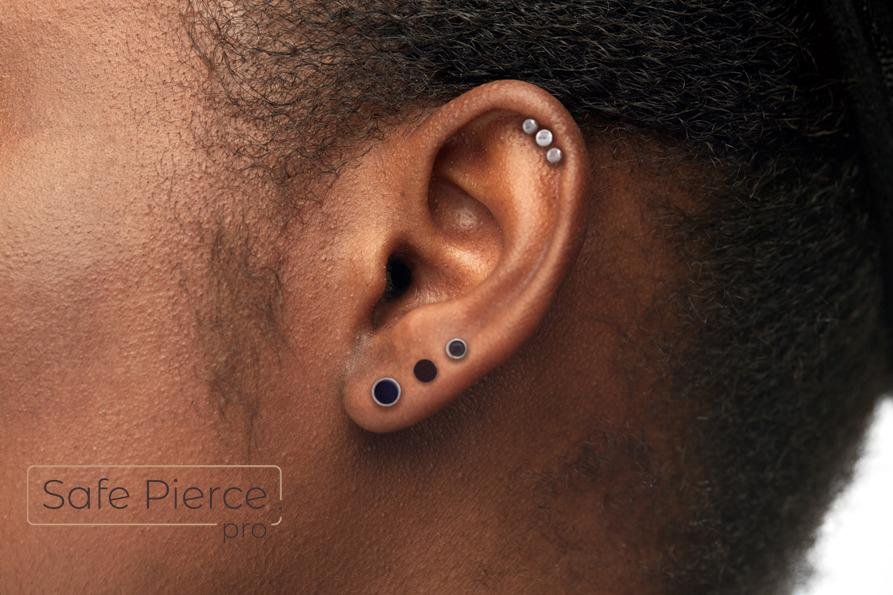
So you’re thinking about a cartilage piercing. Maybe you’ve already picked out the spot on your ear, or maybe you’re still working out whether it’s a good idea in the first place. Either way, there’s a decent chance you’ve got a few worries sitting in the back of your mind. Does it hurt more than a normal ear piercing? How long before it actually stops feeling weird? And what on earth do you put in it while it heals?
Fair questions, all of them. A cartilage piercing isn’t the same thing as an earlobe piercing, even though people sometimes talk about them as if they’re interchangeable. They’re not. The tissue is different, the healing is different, and honestly, the whole experience can feel different too. This guide from our team at Theydon Bois Pharmacy runs through what you’re actually signing up for, without the fluff.
What Is a Cartilage Piercing Exactly?
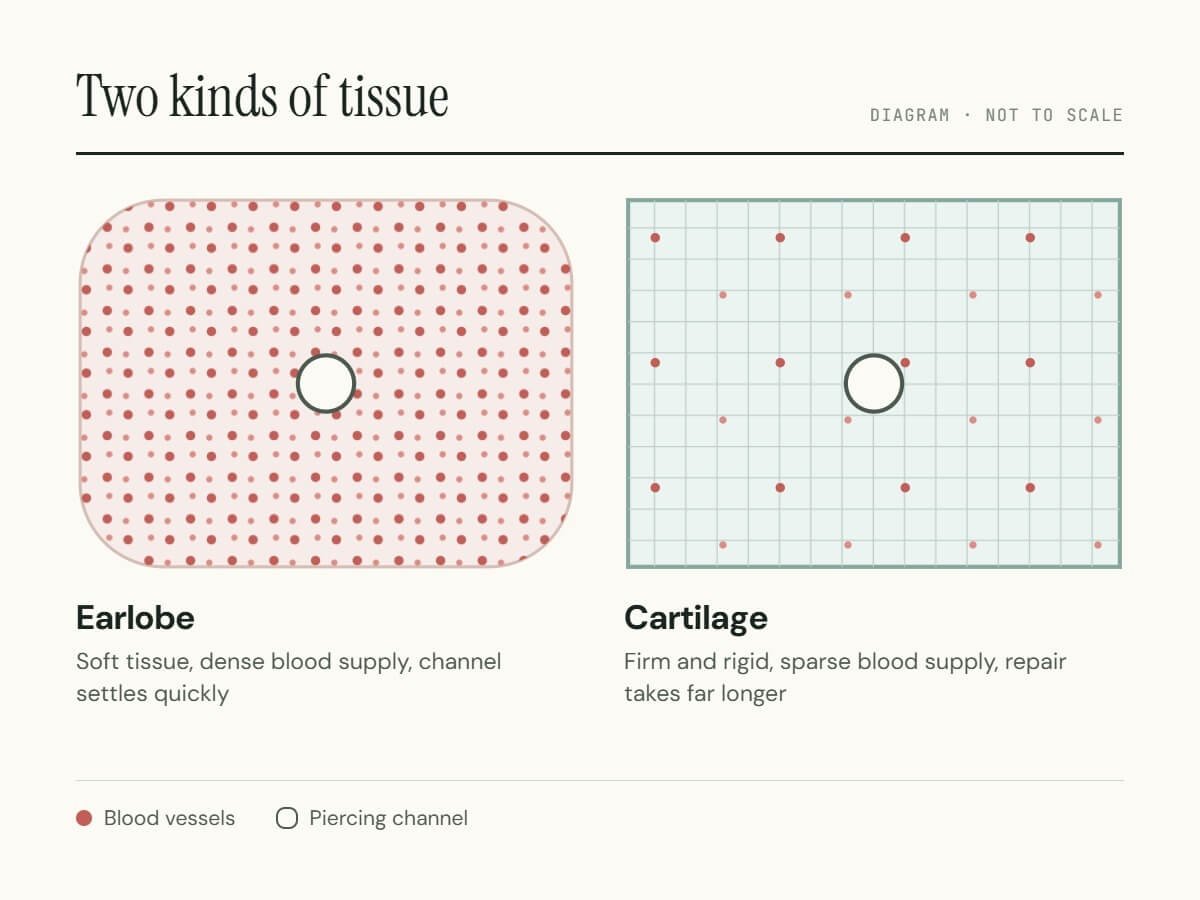
Your earlobe is soft. It’s mostly fat and skin, with a decent blood supply running through it, which is a big part of why lobe piercings tend to heal fairly quickly and without much drama.
Cartilage is a completely different material. It’s firmer, more rigid, and the blood supply is much thinner on the ground. That matters because blood carries the stuff your body needs to repair itself, so less blood flow generally means slower healing.
Here’s something that trips people up early on: “cartilage piercing” isn’t one piercing. It’s an umbrella term. Underneath it sit several different placements, each with its own name, its own quirks, and its own healing timeline.
Where Can You Actually Get One?
Not every ear is built the same, so not every placement will suit yours. A decent piercer will look at your ear before recommending anything.
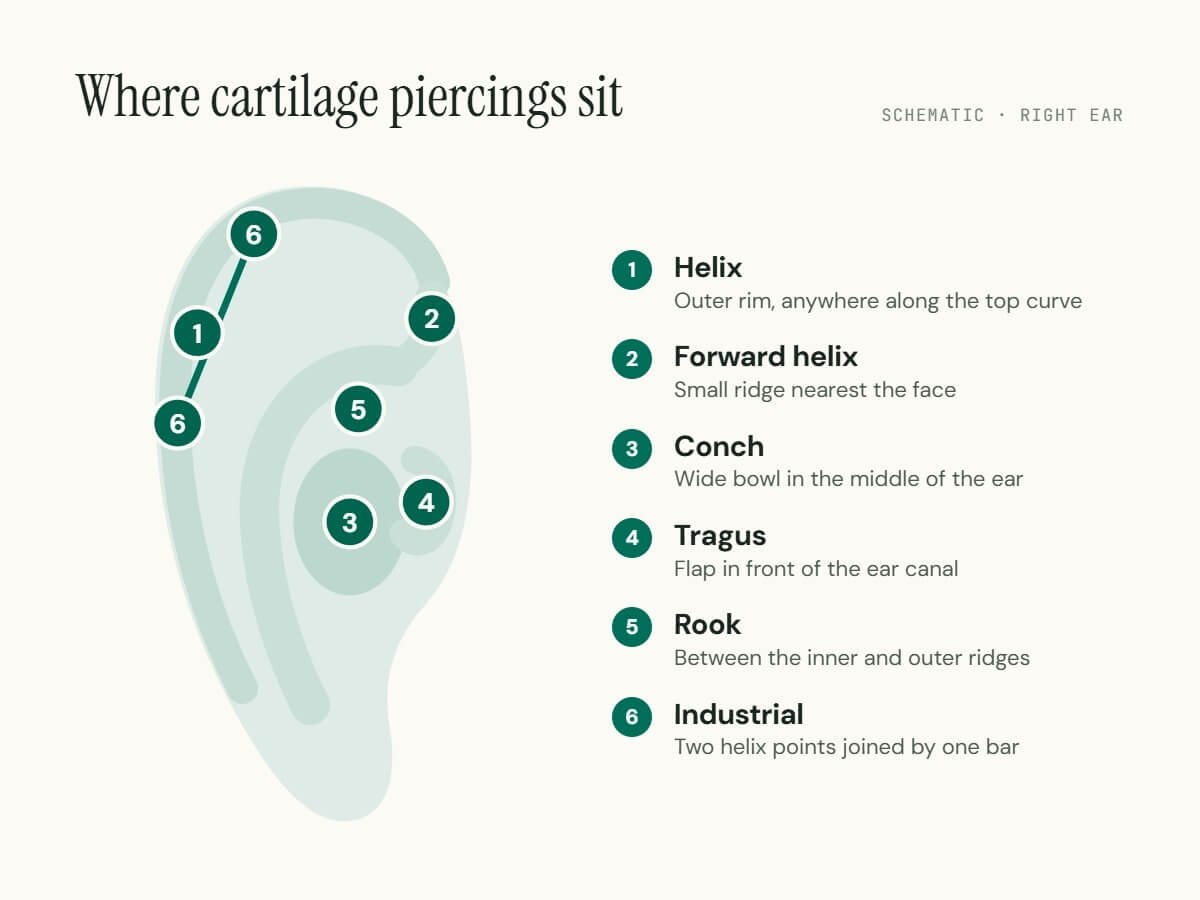
Helix Piercing
This is the outer rim of the ear, the curved edge that runs along the top. Probably the most common upper ear piercing you’ll come across, and it can sit almost anywhere along that curve.
Forward Helix Piercing
Slightly different spot, this one sits on the small ridge nearest your face, just above the tragus. Some people get a whole row of these done at once for a stacked look.
Conch Piercing
The conch is that wide, bowl-shaped bit in the middle of your ear. Depending on exactly where it sits, you might be able to wear a stud or a hoop through it.
Tragus Piercing
That little flap of cartilage sitting just in front of your ear canal, partly covering it. A tragus piercing goes straight through that bump.
Rook Piercing
Tucked between the inner and outer ridges, just above the tragus. It’s a bit more hidden than a helix, which some people prefer.
Industrial Piercing
Two piercings, one bar. It usually runs across the upper ear connecting two points along the helix. Because you’re healing two piercing sites at once, this one tends to demand more patience than most.
Worth saying again: your ear anatomy might not suit every one of these. That’s exactly why a proper consultation before the piercing matters.
Cartilage vs Earlobe: What’s Actually Different?
Earlobe tissue is soft with good blood flow, so it heals faster. Cartilage is firm with limited blood flow, so it heals more slowly and stays more sensitive to knocks along the way.
| Earlobe Piercing | Cartilage Piercing | |
| Tissue type | Soft | Firm and rigid |
| Blood supply | Good | Limited |
| Typical healing | A few weeks | Several months, sometimes more |
| Common jewellery | Studs, small hoops | Flat back studs, small hoops, curved barbells |
| Sensitive to pressure | Not especially | Quite a bit, particularly sleeping |
| Snagging risk | Low | Higher, catches on hair and headphones |
If you’re used to earlobe piercings healing without much thought, cartilage will feel like a bigger commitment. That’s just how it goes.
Does a Cartilage Piercing Hurt?
Honestly? It depends on who you ask and where you’re getting pierced. Thicker areas like the conch or an industrial setup tend to get described as more intense, while a lot of people find the helix pretty manageable. Pain tolerance is personal, and so is ear anatomy, so there’s no single number that applies to everyone.
Most people describe the actual moment as a sharp pinch, over quickly, followed by some soreness and throbbing for a few days. It’s rarely described as unbearable. Uncomfortable, sure, but that’s about it for most people.
How Long Does a Cartilage Piercing Take to Heal?
There isn’t one fixed answer here, but as a rough guide, cartilage piercings generally take a fair bit longer than earlobes, often several months, sometimes longer for something like a conch or an industrial.
Here’s the bit people often miss: feeling fine and being fully healed aren’t the same thing. A piercing can stop hurting relatively early on while the tissue underneath is still quietly doing its thing. That’s why piercers usually tell you not to swap jewellery early, even once everything looks and feels okay on the surface.
A few things push healing time one way or the other:
- Which part of the ear got pierced
- How consistent you are with aftercare
- General health, and things like smoking
- Whether the piercing keeps getting knocked or caught on something
- Just plain individual differences in how bodies heal
Treat any healing estimate as a rough guide rather than a countdown clock.
How Should You Care for a New Cartilage Piercing?
Aftercare probably matters more than anything else here. Following NHS style guidance for new piercings, a few things make a real difference.
Wash your hands before you go anywhere near it. Sounds obvious, gets skipped constantly. Clean it gently, usually around twice a day, with a saline solution or whatever your piercer sent you home with, rather than anything harsh. Dry it with a clean paper towel instead of a bath towel that’s been used on other parts of your body.
Try not to fiddle with it. Constant touching introduces bacteria and slows things down more than people expect. Some piercers say to gently turn the jewellery while cleaning; others say leave it alone completely, so check with whoever actually did your piercing rather than guessing.
Sleeping is a genuine problem for cartilage piercings. Rolling onto it at night puts pressure on healing tissue, so try to sleep on the other side where you can. Same goes for headphones, hats, helmets, and hair getting tangled in the jewellery.
Keep pillowcases and phone screens clean too, since both spend a lot of time pressed against your ear. And skip pools, hot tubs, and open water until things have properly settled.
None of this replaces whatever specific instructions your own piercer gave you. Follow theirs first.
What Jewellery Is Best for a Cartilage Piercing?
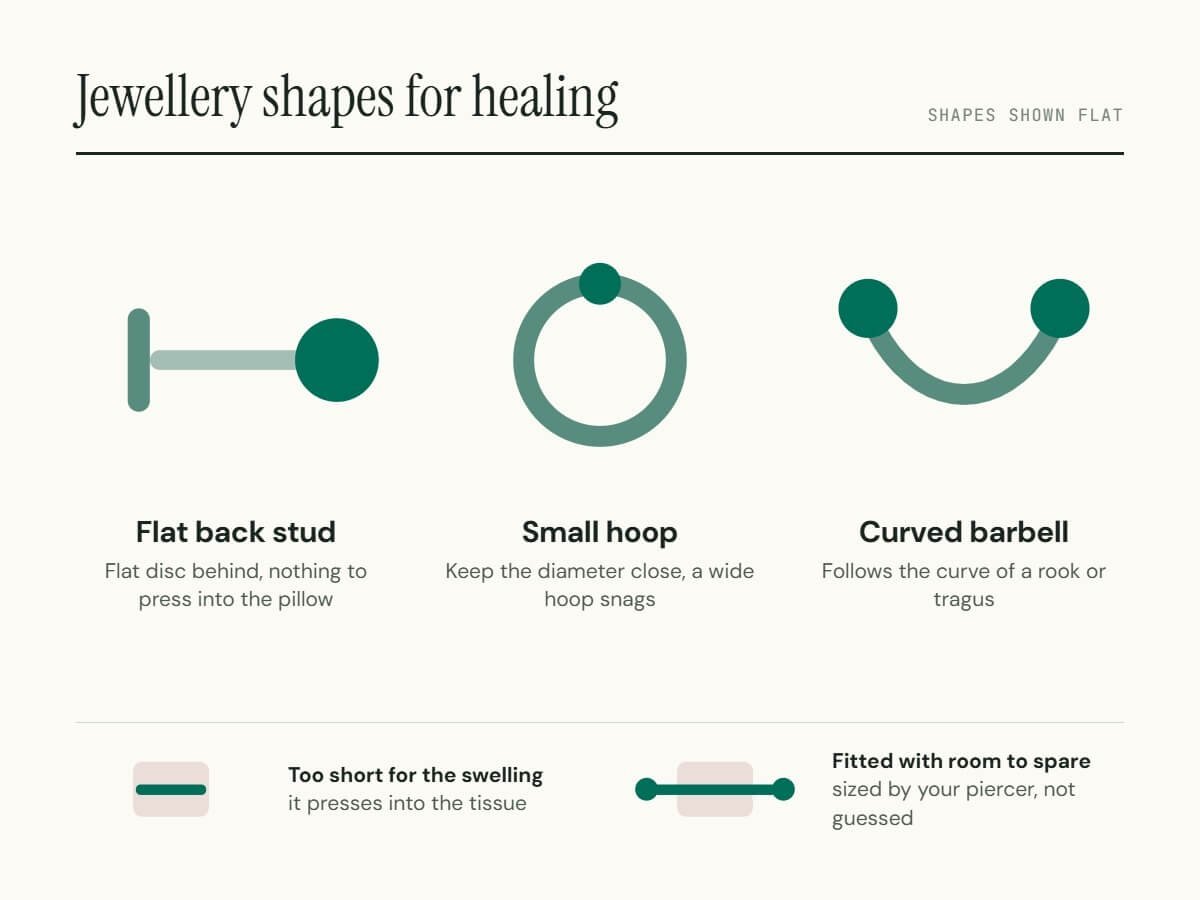
Jewellery choice matters just as much as the cleaning routine, maybe more. The best earring for a cartilage piercing during healing is usually the one that fits properly, sits at the right size for any swelling, and doesn’t irritate your particular skin.
A few things worth thinking about:
Sizing needs to be right, not just close. Too tight and it digs into swollen tissue. Too loose and it moves around, catching on things and irritating the wound.
Material matters. A lot of piercers lean towards implant-grade metals for initial jewellery because they tend to sit well with most people’s skin during healing.
The shape should suit the spot. A flat back stud generally works well for a helix or forward helix, while a small hoop or curved barbell might suit a tragus or conch better, depending on your anatomy.
Get it fitted properly rather than guessing at home, especially in the early weeks. And resist the temptation to go for something elaborate straight away. Simple, well-fitted jewellery is just more comfortable while things are healing.
No single material or style works for absolutely everyone, so it’s worth talking it through with your piercer rather than just picking something because it looks nice online.
Things Beginners Often Get Wrong
A handful of habits tend to slow healing down or cause irritation:
- Constantly touching or turning the piercing
- Swapping jewellery before the piercer has actually given the go-ahead
- Sleeping straight on it, especially early on
- Letting hats, headphones, hair or clothing snag the jewellery
- Reaching for alcohol or harsh antiseptics instead of what was recommended
- Jumping into pools or hot tubs too soon
- Brushing off symptoms that are clearly getting worse, not better
Patience is genuinely the biggest factor most people underestimate.
Signs of Irritation and Possible Infection
New cartilage piercings are often a bit tender, itchy, and slightly red for the first few weeks. Some clear or pale fluid crusting around the jewellery is normal too. Small bumps, sometimes called granulomas, can also show up around cartilage piercings, and these are usually manageable rather than a red flag on their own.
That said, there’s a line between normal healing grumbles and something that needs a proper look. NHS guidance points to swelling, pain, heat, or redness that’s getting worse rather than better; pus that might be white, yellow, or green; and feeling generally unwell or feverish as signs that something might be infected.
We can’t diagnose an infection through a blog post, and we’d say the same to anyone trying to diagnose it themselves at home. If something feels off, get it checked properly rather than waiting it out.
When Should You Speak to a Healthcare Professional?
It is sensible to seek medical advice if you notice any of the following:
- Pain that is severe or getting worse instead of easing
- Swelling that is spreading or does not settle down
- Redness that is increasing rather than fading
- Pus or discharge with an unusual colour or smell
- A fever, or feeling generally unwell
- Signs of a possible allergic reaction to the jewellery
- A piercing that looks embedded, pulled through, or badly damaged
NHS guidance suggests getting an urgent GP appointment or contacting NHS 111 if you think a piercing might be infected, and advises leaving the jewellery in place unless a doctor tells you otherwise, since removing it can sometimes trap infection under the skin.
Our pharmacy team can offer general advice on minor skin concerns and point you towards the right next step, though for anything that looks like it may be infected, seeing a GP or contacting NHS 111 is the appropriate route rather than waiting to see if it improves.
Tips for Choosing a Professional Piercer
Choosing a reputable, professional piercer has a big influence on how safely and comfortably your piercing heals. General good practice to look out for includes.
Our ear piercing service at Theydon Bois uses a professional stud system, which is well suited to earlobes but isn’t the right tool for cartilage, so here’s what to look for in a specialist:
- Clear hygiene standards, including visible hand washing and clean surfaces
- Proper sterilisation of equipment, ideally using an autoclave
- A piercer with genuine training and experience in cartilage piercing specifically. Single-use or properly sterilised needles rather than piercing guns for cartilage
- Clear, written aftercare advice given at the end of the appointment
- Good quality jewellery suited to initial piercing rather than novelty or costume jewellery
- A studio that is happy to answer your questions before you go ahead
Taking the time to choose a studio with good hygiene practices is one of the most useful things a beginner can do to reduce the risk of complications later on.
Final Thoughts
A cartilage piercing can be a genuinely nice bit of self-expression, but it does ask for more patience than a lobe piercing ever will. Knowing what you’re actually getting into, choosing a piercer who knows their craft, and sticking with proper aftercare gives it the best possible shot at healing without drama.
If you’ve got general questions about looking after your skin while it heals, our team at Theydon Bois Pharmacy is happy to talk it through. You can pop into the pharmacy, call us, or book an Appointment with our team if you’d rather talk it through in person.
Frequently Asked Questions
Does a cartilage piercing hurt more than an earlobe piercing?
Generally, yes, a lot of people find cartilage more intense simply because the tissue is firmer, though pain tolerance and the exact spot both play a big part in how it actually feels.
How long does healing really take?
Longer than an earlobe, usually, often several months. The exact time shifts depending on where it is, how well you look after it, and how your own body tends to heal.
Can I sleep on a new cartilage piercing?
It is best to avoid sleeping directly on a new cartilage piercing where possible, since pressure and friction from a pillow can irritate the area and slow healing.
Can I just swap the jewellery early if it feels fine?
It is generally best to wait until your piercer confirms the piercing has healed enough, since changing jewellery too soon can irritate the tissue or introduce bacteria.
What jewellery is suitable for cartilage piercings?
Suitable jewellery is generally well fitted, made from a material your skin tolerates well, and matched to the specific placement, such as a flat back stud or a small hoop depending on the area.
What’s the difference between a helix and a cartilage piercing?
A helix is one specific type of cartilage piercing, sitting on the outer curve of the ear. A cartilage piercing is the wider category that includes the helix and several other placements.
What should I do if my cartilage piercing looks infected?
If you notice increasing redness, swelling, pus, or feel unwell, it is best to seek medical advice from a GP or NHS 111 rather than trying to treat it yourself, and to leave the jewellery in place unless a doctor advises otherwise.