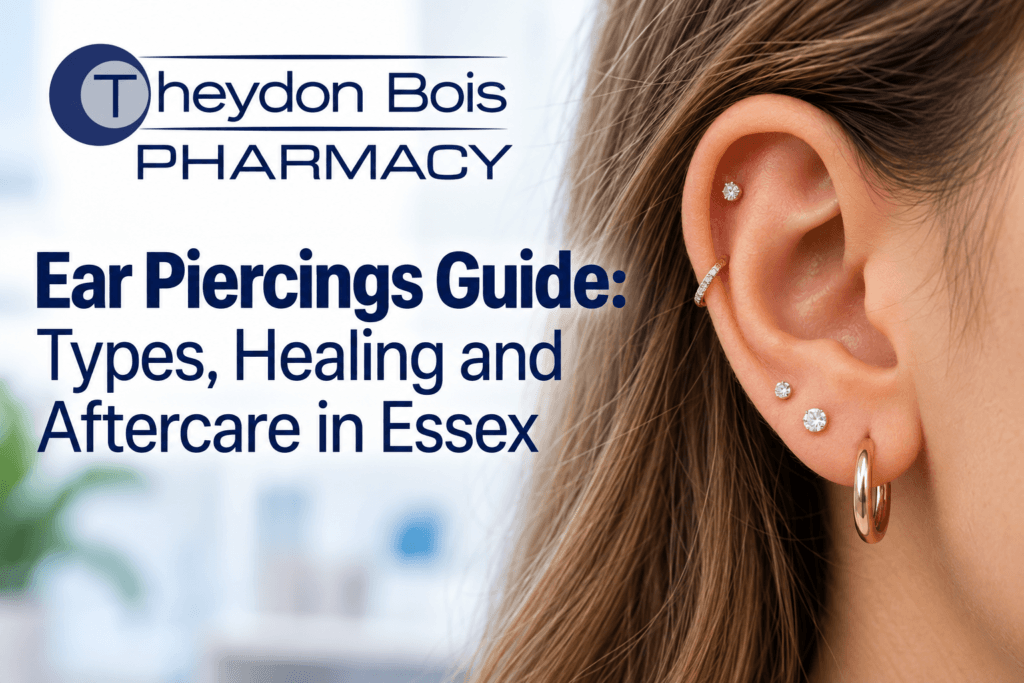
Most people should start with a lobe piercing. It is soft tissue, it is low risk, and it usually heals in about six to eight weeks. Cartilage piercings like a helix or a tragus can take three to nine months to heal fully. This guide explains how to choose a placement you will actually look after, what our appointment includes, and how to keep it healing well.
What We See In The Chair
A parent brings their eight-year-old in for a first lobe piercing and asks, almost every time, whether we also do cartilage, usually because a friend’s child has a helix stud. We explain we only pierce lobes here, and why that is actually the safer choice for a first piercing. We also see adults who swap their starter studs out around the three-week mark because the piercing looks fine, only to come back a few weeks later with a sore, weeping lobe, because the channel underneath had not finished healing yet. And every so often we have to turn someone away who wanted a tragus or a conch piercing, so it is worth knowing what we offer before you book, not after.
Choosing A Lobe Placement?
- Standard earlobe. This is the classic first piercing. It is soft tissue, it heals the fastest, and it works with almost any earring once it has healed.
- Second or stacked lobe. This is a second piercing placed above the first, so you can wear two pieces of jewellery together.
- Upper lobe. This sits a little higher than the standard lobe but is still soft tissue, giving you a layered look without moving into cartilage.
A few practical things to think about before you choose. Does your hairstyle catch on jewellery easily? Do you sleep on one side? Do you wear headphones or glasses often? Are you sensitive to certain metals? Nickel is the most common cause of metal allergies, so our titanium and surgical steel options are worth asking about. We will talk through all of this with you at your consultation before we help you choose jewellery.
Why We Only Offer Lobe Piercing?
Cartilage placements such as helix, forward helix, flat, conch and tragus need a longer healing time and are more likely to run into problems. They are really a different service from what a pharmacy setting is built for. If you want a cartilage piercing, a specialist body piercing studio is the better choice. What we do well is lobe piercings done properly, backed up with real aftercare support.
What Is Included And What It Costs?
Your appointment includes a consultation with a member of our healthcare team, sterile single-use equipment, and aftercare advice before you leave. Jewellery choices include surgical steel, titanium, 9K or 14K gold, and 24K gold-plated studs. Anyone under 16 must be accompanied by a parent or legal guardian, who gives consent before we go ahead.
How Do You Actually Choose A Placement?
There is no single best piercing, just the one that fits your life and that you will realistically take proper care of. A few things worth thinking through first. Does your usual hairstyle catch on jewellery easily? Do you tend to sleep on one side? Do you wear headphones, a helmet or glasses a lot? Does your school, workplace or sport have any rules about visible piercings? Are you sensitive to certain metals? And are you happy with just one for now, or already picturing more later on?
When you book with us, we will always talk through your options with you first and help you pick suitable jewellery, rather than rushing straight into it.
Does It Hurt?
Most people describe a quick, sharp pinch followed by a little warmth, and that is usually it. Lobe piercings are less uncomfortable than cartilage because it is soft tissue, and staying relaxed really does make a difference. That is why we keep the appointment calm and explain each step as we go.
How Long Does Healing Take?
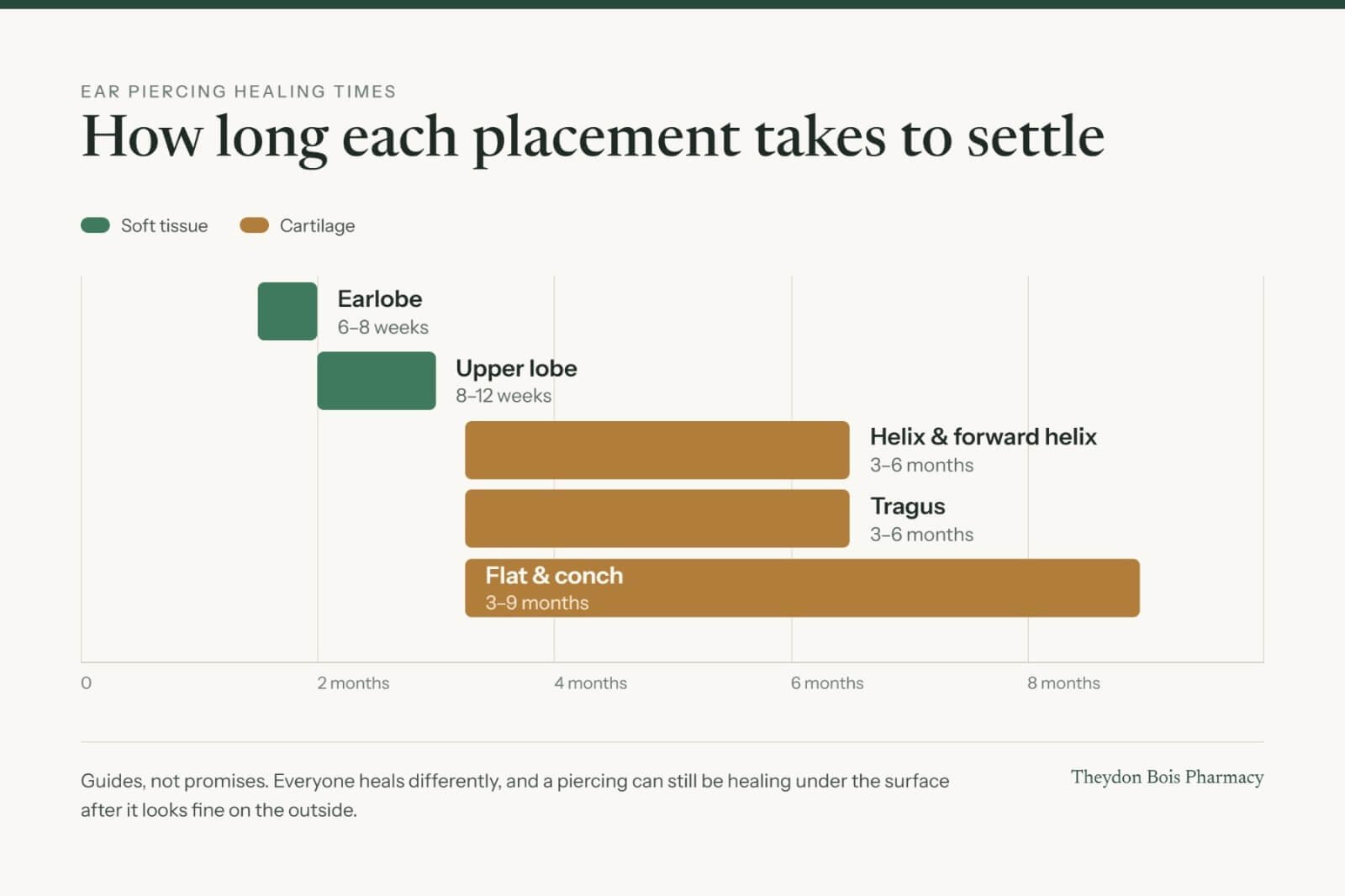
Based on NHS guidance on caring for a new piercing, and what we see in our own clinic, a standard earlobe usually heals in around six to eight weeks, and an upper lobe usually takes around eight to twelve weeks. These are general guides rather than promises, since everyone heals a little differently. A piercing can still be healing underneath even when it looks settled on the outside. That is exactly why we always tell people not to swap their starter jewellery out early.
Choosing A Professional Service
A piercing should always be done by someone properly trained, using sterile equipment, in a hygienic setting registered with the local council. Beyond that, look for a service that talks you through your options, checks that the placement suits you, and gives you clear aftercare advice rather than just a leaflet on your way out.
We offer ear piercing for children and adults at our pharmacy in Theydon Bois. You can also read more about ear health on our ear anatomy and hearing care page, or learn more about our team on our about us page.
Aftercare Essentials
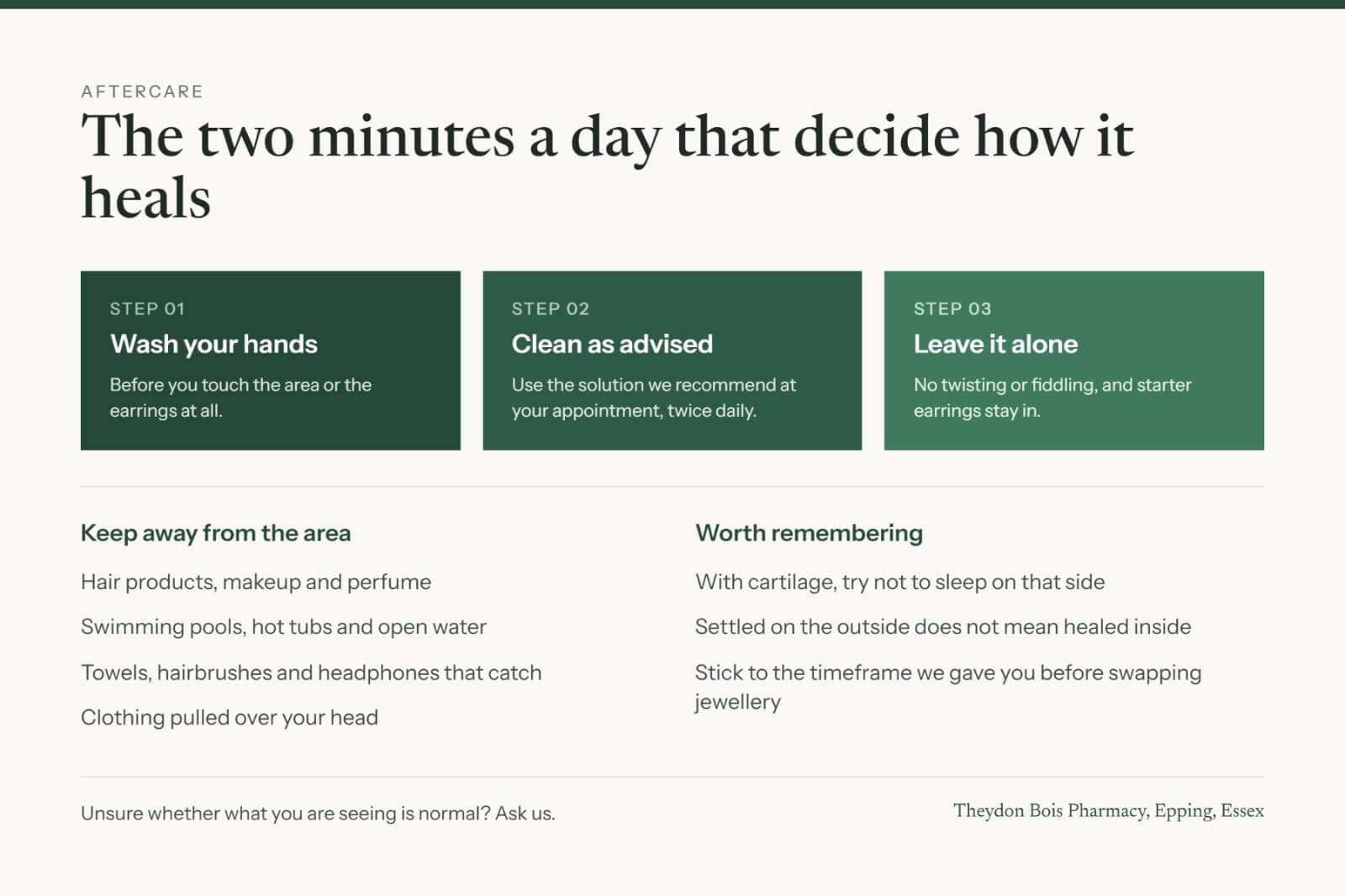
Good aftercare is simple, but it needs to be consistent. Wash your hands before touching the area or the earrings. Clean the piercing with a salt water soak twice a day, following NHS aftercare advice. Leave your starter earrings in for the full healing period, even if it looks fine sooner. Avoid swimming pools, hot tubs and open water until healing is complete, and keep hair products, makeup and perfume away from the area while it settles.
What Is Normal, And What Needs Checking?
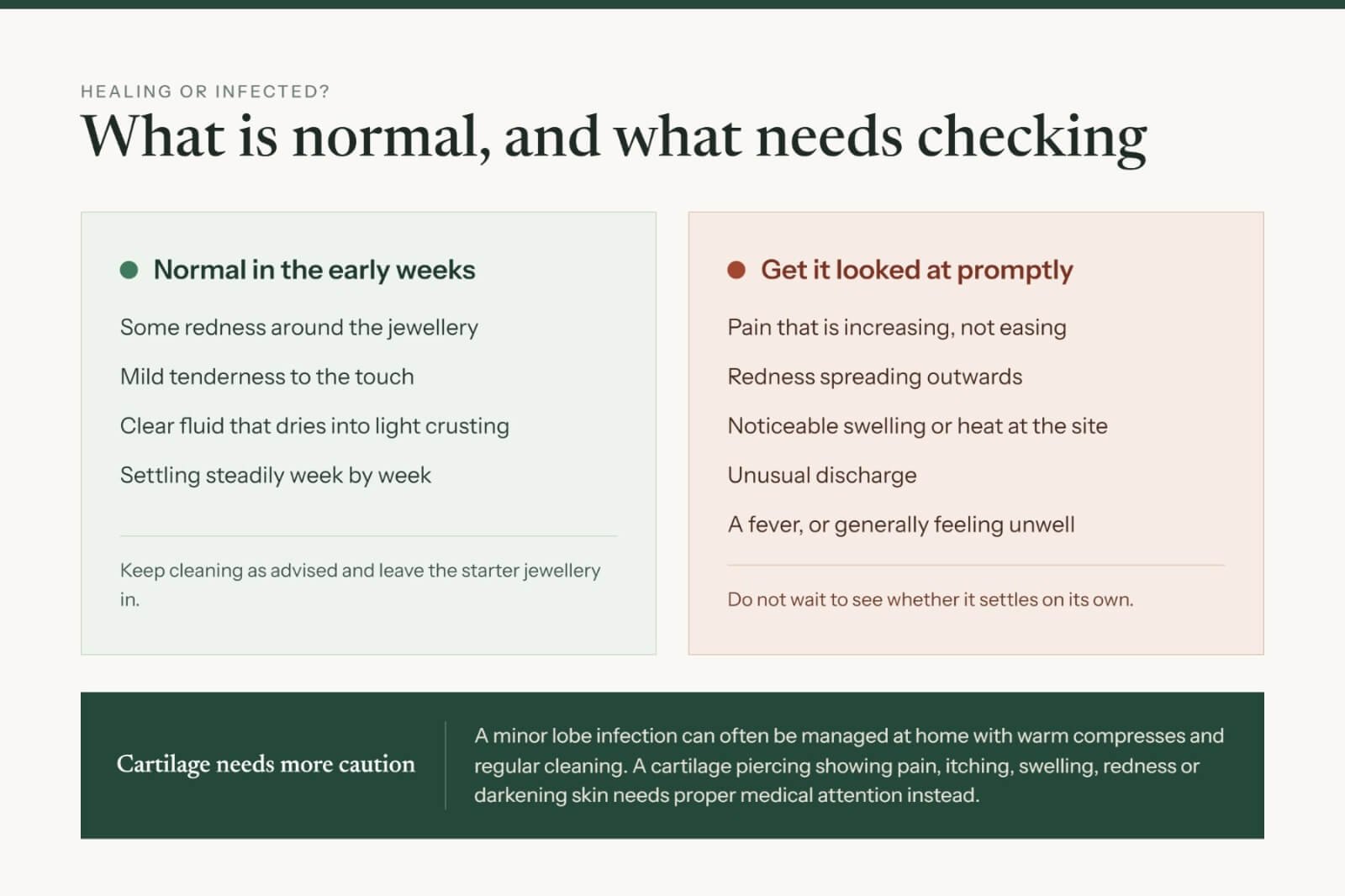
Some redness, mild tenderness and a little clear fluid that dries into light crusting is normal in the early weeks. Contact a healthcare professional if you notice pain that keeps getting worse, redness that is spreading, noticeable swelling, unusual discharge, a fever, or if you generally feel unwell. You can read more in the NHS guide to signs of infection.
Book Your Ear Piercing In Theydon Bois
Ready to book? Our lobe piercing appointments usually take around 15 to 20 minutes and include your consultation, jewellery choice and aftercare advice, all for £25 to £65 depending on your jewellery choice. Book an appointment today to get a slot at our Theydon Bois pharmacy this week.
Frequently Asked Questions
What is the best first ear piercing?
For most people, a standard earlobe piercing is the easiest place to start. It is a classic placement, gives you plenty of jewellery options later on, and generally heals faster than any cartilage placement.
Do you pierce cartilage, such as helix, conch or tragus?
We only offer lobe piercings at our pharmacy. For cartilage piercings, a specialist body piercing studio is a better choice.
Can men get their ears pierced at your pharmacy?
Yes. Our service is open to adults and children, including men. A single lobe stud tends to be the most popular starting point, and we are always happy to talk through other options with you at your appointment.
How long do I need to keep the starter earrings in?
Around six to eight weeks for a standard lobe piercing, and around eight to twelve weeks for an upper lobe. Even if it looks healed sooner, the piercing channel underneath may not be fully healed yet.
Can I swap my earrings after a few weeks?
It is best not to do so before six to eight weeks for a lobe piercing. Swapping earrings too early is the most common reason people come back to us with a sore or weeping piercing.