
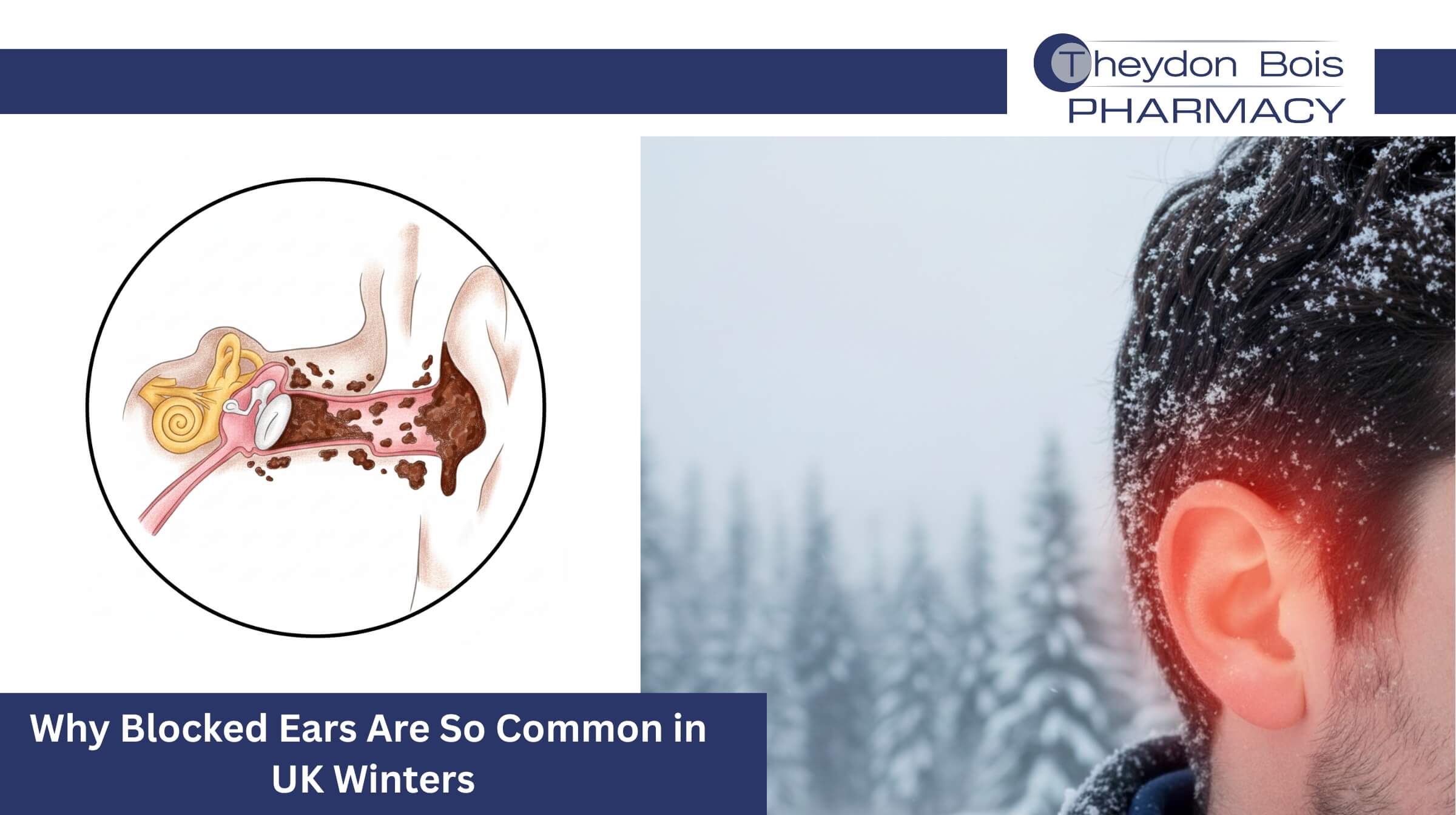
Winter can be tough on your ears, especially in the UK. As temperatures drop, many people notice their hearing feels muffled, their ears feel blocked, or they experience discomfort they don’t get during warmer months.
At Theydon Bois Pharmacy, we see a noticeable increase in patients seeking ear wax removal in Essex during winter. Understanding why this happens and how to protect your ears can help you avoid problems this season.
Your Body’s Defence Mechanism Against the Cold
Here is something most people do not realise: your ears actively respond to cold temperatures.
When cold air enters your ear canal, your body treats it as a threat. In response, the glands in your ear canal produce more wax to create a protective barrier. This is your body’s way of keeping the delicate inner ear warm and shielding it from the cold.
In warmer months, ear wax stays soft and gradually moves out of the ear naturally. You barely notice it. But in winter, two things change:
1. The colder it gets, the more wax your ears generate as a defence mechanism.
2. Cold temperatures cause ear wax to become thicker and stickier. Instead of migrating out of the ear naturally, it stays put and accumulates.
The result? A buildup that blocks the ear canal, muffles your hearing, and causes discomfort.
If you want to understand more about this process, read our guide on why ear wax builds up.
Why UK Winters Make Wax Build-up Worse
The UK’s particular kind of winter weather creates the perfect conditions for ear wax problems.
Cold and Damp – A Bad Combination
Unlike the dry cold experienced in many other countries, UK winters are characteristically damp. This combination of cold air outside and warm, dry air inside (from central heating) creates constant fluctuations that affect your ears.
When you step outside, your ear wax hardens. When you come back into a heated room, moisture can get trapped against the hardened wax. This cycle repeats daily throughout winter, making blockages more likely.
Central Heating Dries Out Your Ears
British homes rely heavily on central heating during winter. While this keeps us warm, it also dries out the air inside our homes.
Dry air affects the skin inside your ear canal, causing it to flake. Your body responds by producing more wax to protect and lubricate the dry skin. More wax, combined with the hardening effect of cold outdoor temperatures, increases the risk of blockages.
We Spend More Time Indoors
During winter months, most of us spend significantly more time inside. This means:
- More screen time – watching TV, working from home, video calls
- More earbuds and headphones – blocking natural wax migration
- Less physical activity – movement helps wax travel out of the ear naturally
The combination of reduced movement and increased earbud use is a recipe for wax buildup.
The Wireless Earbud Problem
Here is a modern factor that many people overlook.
Wireless earbuds like AirPods have become part of daily life. We wear them for music, podcasts, phone calls, and video meetings. In winter, when we are indoors more often, earbud usage increases.
The problem? Earbuds sit directly in the ear canal and:
- Block the natural outward movement of wax
- Push existing wax deeper with each insertion
- Trap heat and moisture, changing the consistency of wax
- Stimulate the ear to produce more wax (the ear treats them as foreign objects)
If you use wireless earbuds daily and notice your ears feel more blocked in winter, this is likely a contributing factor.
The NHS Gap Makes It Harder
In previous years, if your ears felt blocked, you could visit your GP and have the wax removed. Today, that option has largely disappeared.
Most NHS GP surgeries in England no longer offer routine ear wax removal. The service has been decommissioned in many areas, leaving millions of people without easy access to professional ear care.
For those in Essex, this means longer waiting times if NHS services are available at all. Many people put up with blocked ears for weeks or even months because they do not realise private options exist.
We have written more about NHS ear wax removal changes and what alternatives are available.
Signs Your Ears Are Affected by Winter Weather
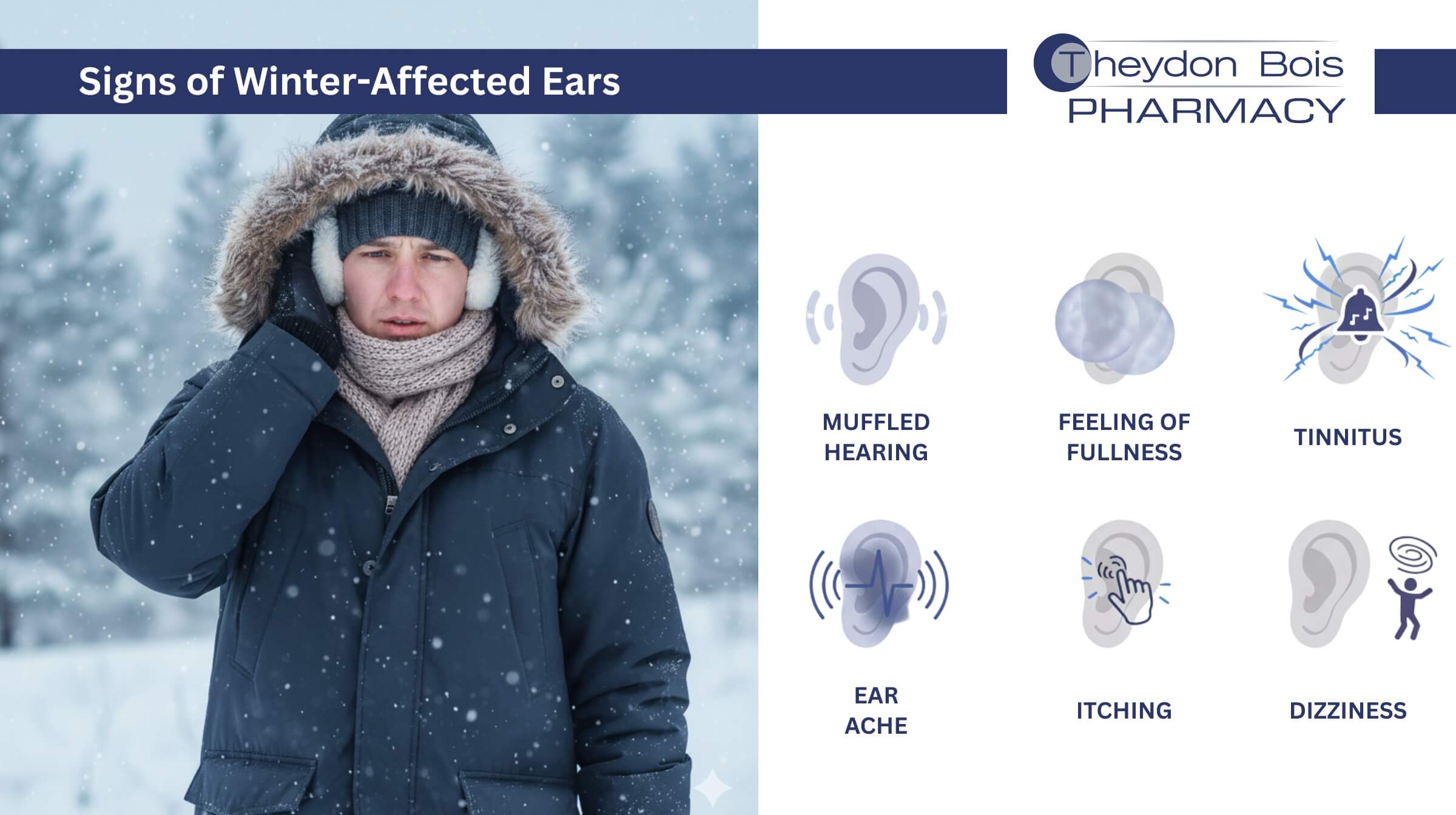
Not sure if cold weather is affecting your ears? Look out for these signs:
- Muffled hearing – sounds seem quieter or less clear than usual
- Feeling of fullness – like something is blocking your ear
- Tinnitus – ringing, buzzing, or hissing sounds that were not there before
- Earache – dull pain or discomfort in one or both ears
- Itching – inside the ear canal
- Dizziness – ear wax and balance problems are more connected than many people realise
If you notice these symptoms appearing or worsening during winter months, ear wax buildup is a likely cause.
What Actually Helps
Do: Use Olive Oil Drops
If you notice symptoms starting, olive oil drops can help. Place 2-3 drops in each affected ear before bed for 2-3 nights. This softens the wax and can help it move out naturally.
Olive oil drops are available from pharmacies, including ours. Avoid hydrogen peroxide drops as these can irritate the skin.
Do: Give Your Ears a Break from Earbuds
If you use wireless earbuds daily, try switching to over-ear headphones during winter. This reduces wax compaction and allows your ears to breathe.
When you do use earbuds, clean them regularly and avoid wearing them for extended periods.
Do: Stay Physically Active
Movement helps ear wax migrate naturally out of the ear. Even a daily walk makes a difference. If you are spending most of winter indoors, make an effort to stay active.
Don’t: Use Cotton Buds
This cannot be stressed enough. Cotton buds do not remove wax – they push it deeper and compact it against the eardrum. Read more about the dangers of DIY ear wax removal.
Don’t: Ignore Persistent Symptoms
If olive oil drops have not helped after a week, or if you have pain, discharge, or sudden hearing loss, do not wait. Professional removal is safe, quick, and effective.
When to See a Professional
Home care works for mild wax softening, but you should seek professional ear wax removal if:
- Symptoms persist after a week of olive oil drops
- You have pain, discharge, or bleeding
- You experience sudden or significant hearing loss
- You feel dizzy or have balance problems
- You wear hearing aids and cannot insert them properly
- You have a history of ear surgery or perforated eardrum
- You have narrow ear canals and are prone to regular buildup
Microsuction is the safest and most effective method for removing stubborn or impacted ear wax. Unlike traditional syringing, it does not use water, making it suitable for almost everyone.
How Often Should You Get Your Ears Checked in Winter?
This depends on how prone you are to wax buildup.
If you have never had problems before, you probably do not need to do anything unless symptoms appear.
If you regularly experience blocked ears in winter, consider booking a check-up at the start of the season (October/November) to clear any early buildup before it becomes a problem.
For those who produce excess wax naturally, regular ear cleaning once or twice a year can prevent winter blockages altogether.
Make Your Winter Ear Care Easy With Our Trusted Ear Wax Removal Services Essex

If cold weather has left you with blocked ears, we can help.
At Theydon Bois Pharmacy, we offer same-day microsuction appointments with no GP referral required. The procedure takes around 15 minutes and most patients notice an immediate improvement in their hearing.
Why patients choose us:
- Rated 4.9/5 from 123 reviews
- Same-day appointments often available
- £50 for one ear, £90 for both ears
- No referral needed
- Serving Epping, Loughton, Chigwell, Harlow, Buckhurst Hill, and surrounding Essex areas
Don’t let blocked ears ruin your winter. Book an appointment today or call us on 01992 812130 for a clear hearing.
FAQs
Why do my ears feel more blocked in winter?
Cold weather causes your body to produce more ear wax as a protective barrier. This wax also hardens in low temperatures, making it harder for your ears to clean themselves naturally. Combined with increased earbud use and time spent indoors, winter creates ideal conditions for wax buildup.
Does central heating affect ear wax?
Yes. Central heating dries out the air in your home, which can dry the skin inside your ear canal. Your body responds by producing more wax to lubricate and protect the dry skin, increasing the risk of blockages.
Can wearing earbuds cause blocked ears?
Frequent earbud use can contribute to blocked ears. Earbuds sit in the ear canal and block the natural outward movement of wax. They can also push existing wax deeper and stimulate the ear to produce more wax.
How can I prevent blocked ears in winter?
Use olive oil drops at the first sign of symptoms, reduce earbud usage, stay physically active, keep your ears dry, and avoid cotton buds. If you are prone to buildup, consider professional ear cleaning before winter begins.
When should I see a professional for blocked ears?
If olive oil drops have not helped after a week, or if you have pain, discharge, sudden hearing loss, or dizziness, seek professional help. Microsuction is safe, quick, and effective for removing stubborn wax.