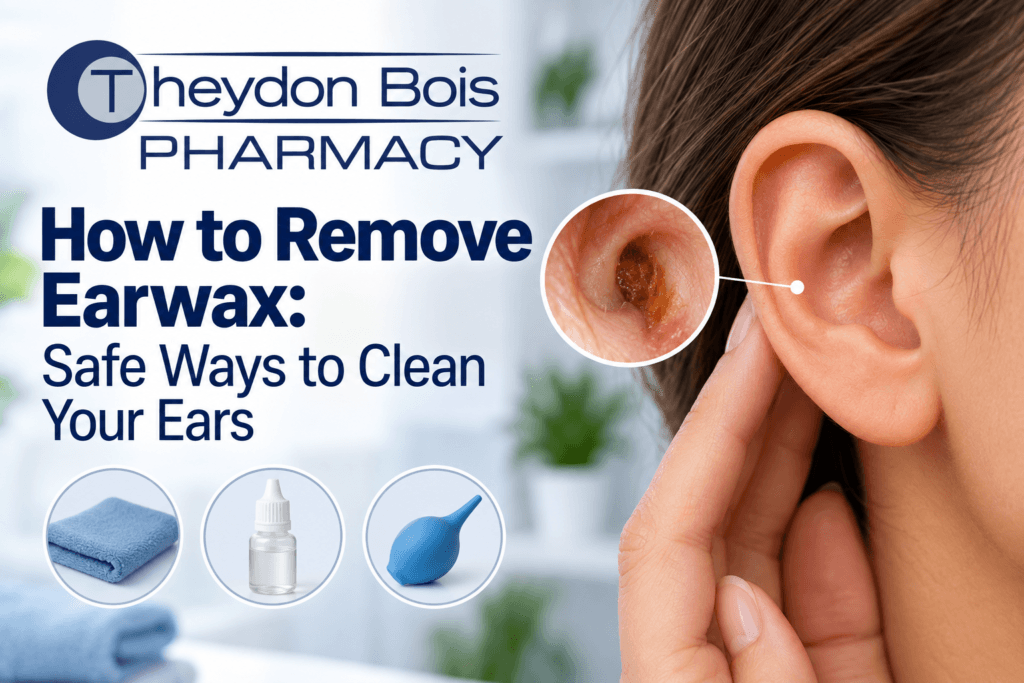
Most ears never need cleaning inside. Wax is there to protect the canal, and it normally works its way out on its own. You only need to do something when it builds up enough to block the ear; even then, the first step is softening drops, not digging.
I see the other side of this most weeks in our Theydon Bois clinic. Someone comes in with a blocked ear, and when I ask what they have tried, it is cotton buds, an ear candle, or a bulb syringe bought online. All three usually make things worse, and two of them can genuinely damage the eardrum. Here is what the NHS and NICE actually advise, what you can safely do at home, and when it is time to have the wax removed properly.
What Causes Earwax Buildup?
Your ears make their own wax to protect the ear canal, and it usually clears out on its own. But not always. A narrow ear canal, excess hair, skin conditions, or inflammation can all make buildup more likely. Hearing aids and other in-ear devices can make things worse too.
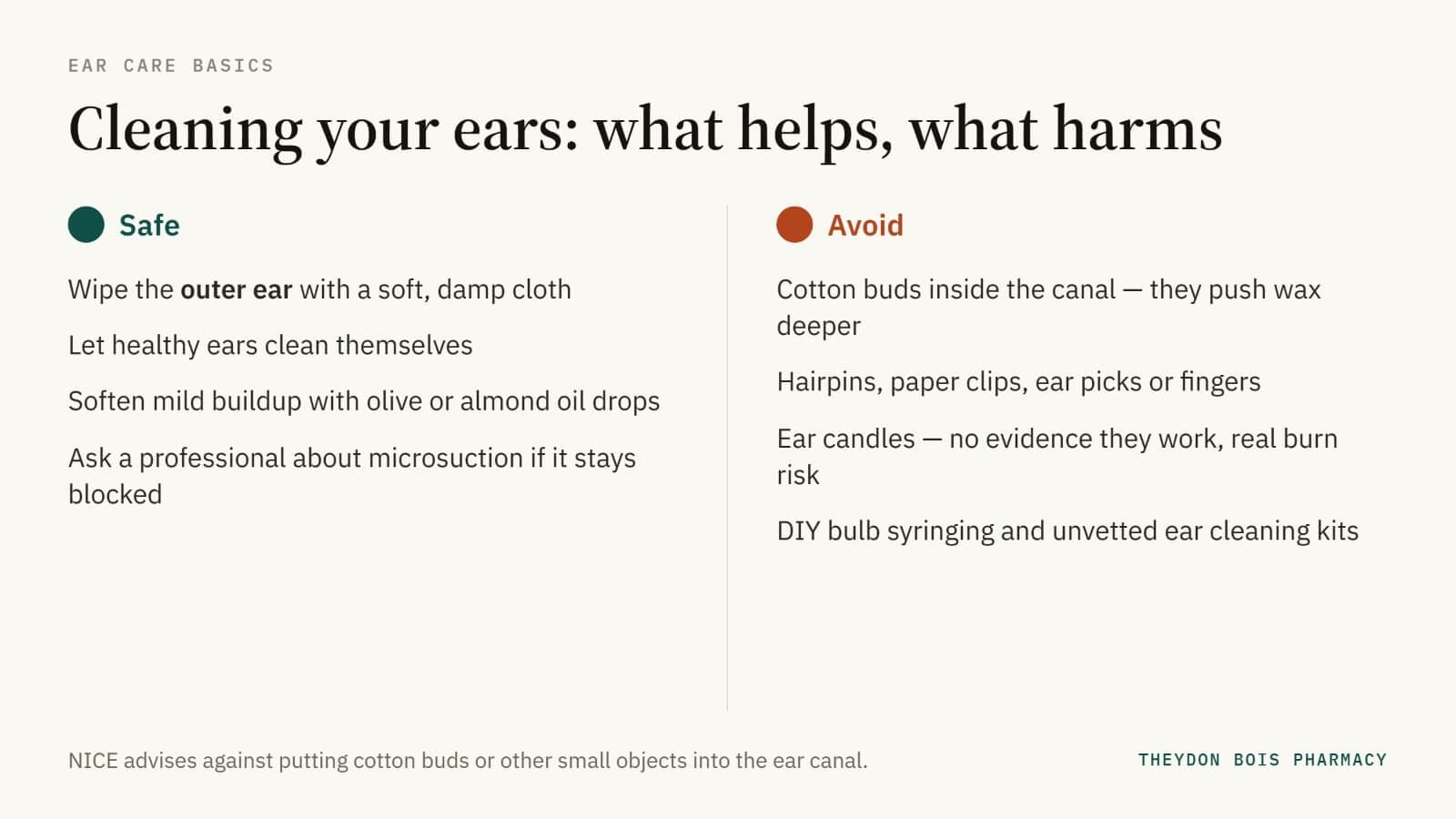
Cotton buds are the classic mistake. Instead of pulling wax out, they usually push it deeper in. NHS guidance on earwax build-up is clear on this. Do not put cotton buds or anything small into the ear canal, as it can damage the ear canal or eardrum.
The Safest Way to Clean Your Ears
You do not actually need to clean inside your ears at all. A soft, damp cloth over the outer ear is all it takes. Nothing needs to go into the ear canal itself.
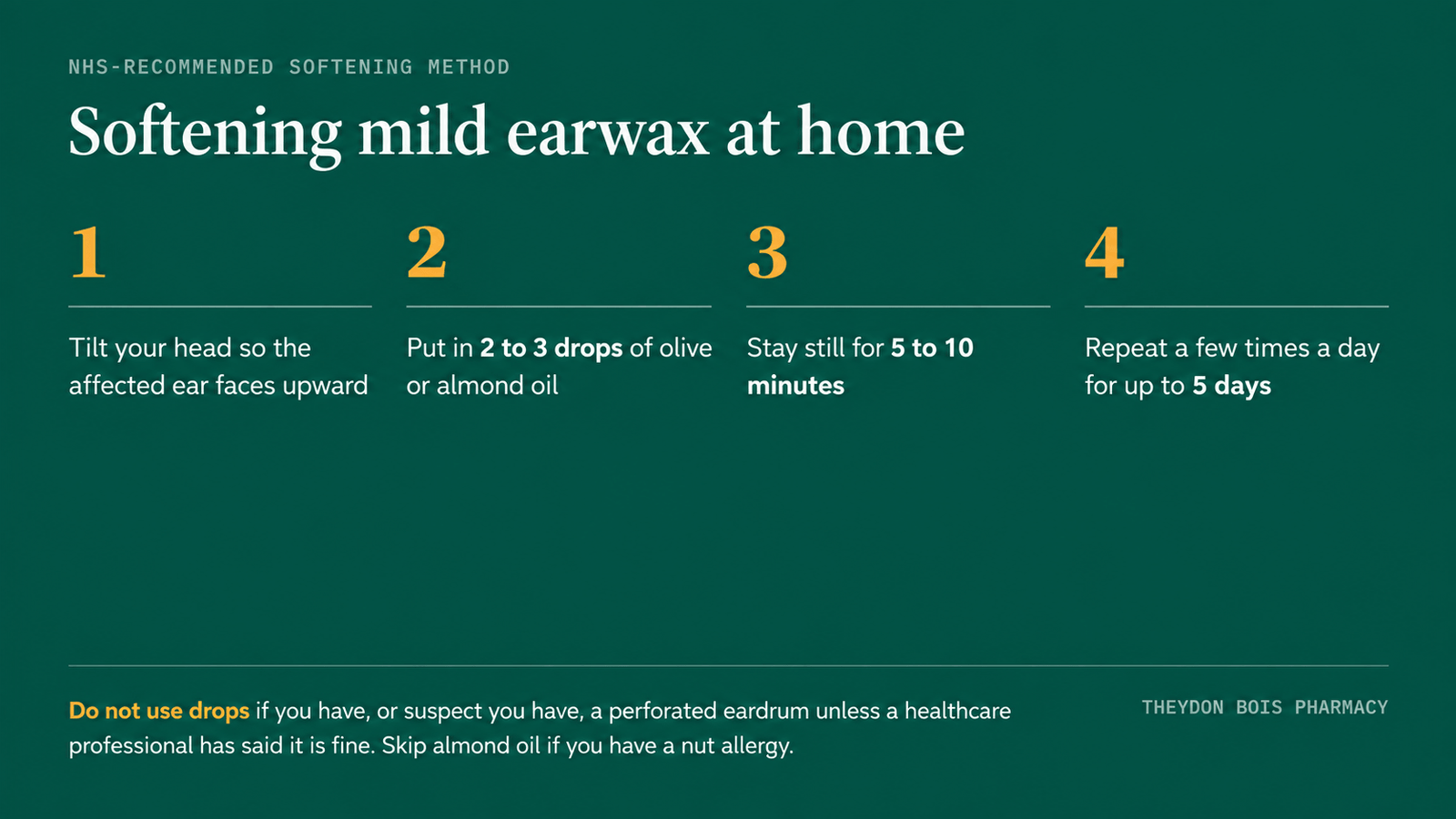
If you have mild wax build-up, ear drops can help soften it. The NHS advice is 2 to 3 drops of olive or almond oil in the affected ear, 3 to 4 times a day, for 3 to 5 days. Lie on your side with that ear facing up for 5 to 10 minutes afterwards so the oil stays where it needs to be. Give it time. Wax often takes up to two weeks to clear this way.
If your ear is still blocked after 5 days of drops, or you cannot hear properly, speak to us or your GP practice rather than carrying on with drops indefinitely. For a full step-by-step guide, see Safely clean your ears at home.
Do not use almond oil if you have a nut allergy. Do not use drops at all if you have, or think you have, a perforated eardrum, or if your ear is painful or discharging, unless a clinician has checked it first.
Can You Remove Earwax at Home?
Sometimes, yes. Mild build-up can often be sorted at home without much fuss. But it is not the right call for everyone.
Drops can soften the wax enough that it clears out by itself. These are reasons to see your GP rather than book wax removal with us: ear pain, discharge or bleeding, a suspected or known perforated eardrum, grommets, previous ear surgery, or an ear infection now or in the last six weeks. We would not treat you on the day in any of these situations, so a GP appointment saves you a wasted trip.
Be careful with anything sold as an ear cleaning kit too. Not every kit suits every person, and some home devices can genuinely cause harm if used the wrong way. NICE advises against inserting cotton buds, hairpins, or any small object into the ear canal. It is really not worth the risk, no matter how tempting it looks on a video online.
What about an ear syringe bulb
This one comes up a lot. People often ask us about using a bulb syringe to flush the wax out themselves. It sounds simple enough on paper, but it needs real caution.
NICE guideline NG98 says manual syringing should not be used at all. Ear irrigation should only be carried out by a trained practitioner who can identify the contraindications and knows when it should not be used.
So please do not assume a rubber bulb syringe is safe just because it is sold for home use. Check with your GP practice or us before you go near one.
What to Avoid When Cleaning Your Ears
Keep fingers, cotton buds, hairpins, ear picks, anything small and pointy, well away from the inside of your ear. More often than not, they push wax deeper rather than out, and they can hurt the delicate
skin or the eardrum. NHS guidance and NICE both advise against inserting objects into the ear canal.
Ear candles deserve a special mention here, and not in a good way. There is no real evidence they remove earwax, and NHS guidance warns they come with a genuine risk of burns.
When to Get Urgent Medical Advice
Some symptoms are not a wax problem and should not wait for a wax appointment.
If your hearing drops suddenly, over three days or less, that needs to be seen the same day. Contact your GP or NHS 111 straight away, or go to A&E out of hours. Sudden hearing loss can be treatable, but only if it is treated quickly.
The same urgency applies to blood or pus from the ear, severe ear pain, or hearing loss along with facial weakness or dizziness.
When Should You Have Earwax Removed Professionally?
If earwax is affecting your hearing or causing other symptoms, and home care has not shifted it, it is time to get it looked at properly. NICE recommends professional removal when wax is affecting hearing, causing symptoms, or making it hard to examine the ear. Depending on your situation, that could mean microsuction or electronic irrigation.
Some GP practices and local NHS commissioned services also remove earwax, though availability varies depending on where you live. We offer a private microsuction service here at Theydon Bois Pharmacy, covering Epping and the wider Essex area.
What Happens During Professional Earwax Removal?
Our treatment starts with an actual look inside your ear to check that wax is really the issue rather than just assuming.
We remove earwax using microsuction here at Theydon Bois Pharmacy. We offer this as a professional earwax removal service in Epping, with home visits also available across our coverage area.
Microsuction uses gentle suction to remove wax under direct vision; no water goes into the ear at any point. Whether it is the right fit for you comes down to an assessment first.
If you are weighing up professional earwax removal in Essex, it is worth having a read of our service details before booking anything.
How Can You Prevent Earwax Buildup?
You cannot really stop your ears making wax, and you would not want to, since it is doing a protective job for you.
What you can control is avoiding the things that make buildup worse. Keep cotton buds and other objects out of the ear canal, full stop. If blocked ears keep happening to you, ask your GP practice or us whether a softening treatment might help.
There is no set schedule that suits everyone. Some people never need professional removal. Others need it fairly often, especially if they use hearing aids or other in-ear devices.
Where Can I Get Earwax Removed in Essex?
If home care has not worked and you are looking for earwax removal in Essex, we offer a professional microsuction service right here in Epping. This is a private, paid-for service.
We run microsuction appointments as well as home visits, with our home visit service covering Theydon Bois, Epping, Loughton, Chigwell, and Buckhurst Hill, plus wider Essex coverage depending on distance.
You can check our service details and book an appointment with us if a private treatment sounds like the right fit for you.
Conclusion
Most ears simply do not need regular cleaning inside. Earwax is part of your ear’s built-in protection, and cotton buds or other objects tend to make a blockage worse, not better.
If you are dealing with mild build-up, a softening treatment might be all you need. But if your ear stays blocked, your hearing is affected, or you are genuinely not sure whether wax is behind your symptoms, getting a professional assessment is the safer route.
If you are in Epping or anywhere around Essex and think you might need professional earwax removal, take a look at our service and book an appointment for suitable treatment.
FAQs About Earwax Removal
Where can I get earwax removed?
Ask a pharmacist, your GP practice, or a community ear care service about earwax removal. We offer a private microsuction service in Epping, plus home visits across Theydon Bois, Loughton, Chigwell, Buckhurst Hill, and wider Essex.
What is the best way to clean your ears?
For most people, it is best to leave the ear canal alone completely and just clean the outer ear with a damp cloth. If wax is causing a blockage, we can advise on a suitable softening treatment or professional removal.
How often should I get my ears cleaned?
There is no single schedule that works for everyone. Healthy ears generally clean themselves. If buildup keeps happening, ask us about the right approach for you rather than booking routine cleanings you do not actually need.
How do I know if earwax is impacted?
A blocked or full feeling, muffled hearing, earache, or tinnitus can all point to earwax buildup. But these symptoms can come from other causes too, so an exam may be needed to confirm wax is actually the problem.
Can I use an ear syringe bulb at home?
Please do not assume it is safe just because it is sold for home use. NICE says manual syringing should not be used, and irrigation should only be carried out by a trained practitioner who understands the contraindications. Check with your GP practice or us first.
Does Earwax Removal Hurt?
Microsuction is usually comfortable, though the suction sound can feel strange or loud. Most people do not find it painful. We will stop straight away if you feel any discomfort.
How Much Does Earwax Removal Cost?
Our microsuction appointment costs £90 and takes around 30 minutes. You can check current pricing and book on our service page.