
Allergy Testing
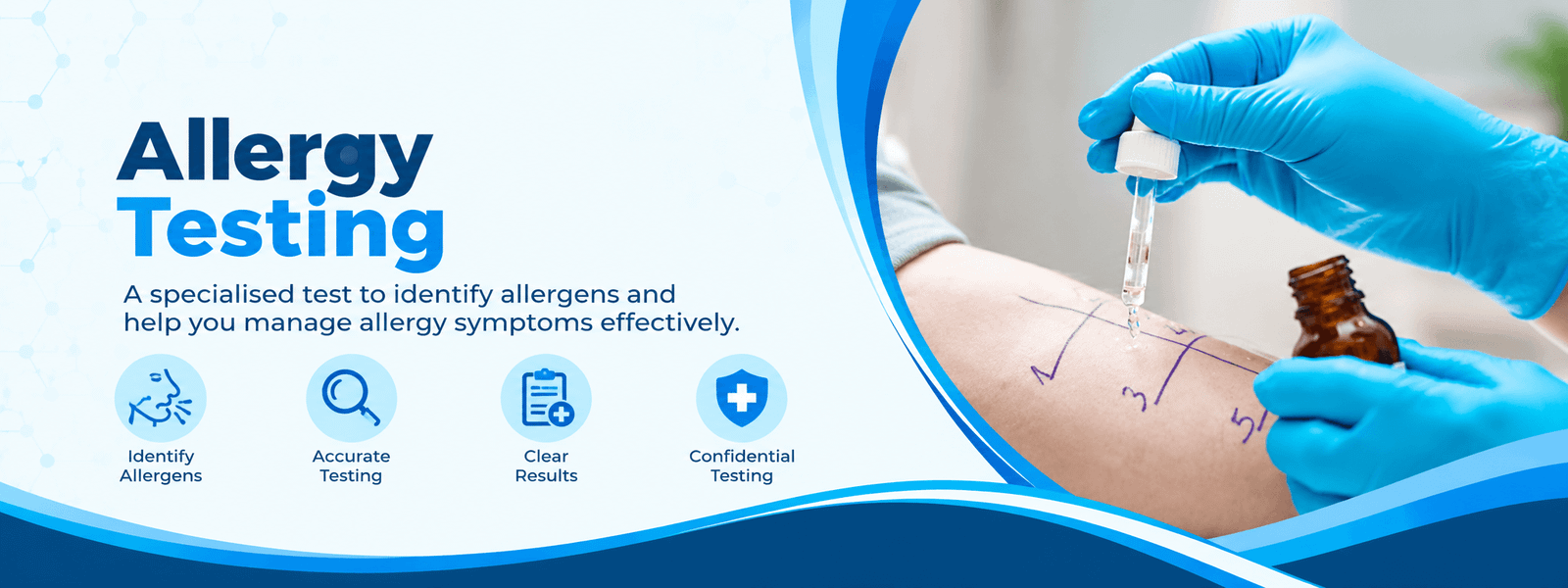
What Is Allergy Testing?
Allergy Testing is designed to help identify potential allergens that may trigger allergic reactions. Depending on the test panel, it may assess the body’s response to specific substances, helping you and your healthcare professional better understand possible allergy-related symptoms.
This test may be suitable for individuals experiencing symptoms such as sneezing, a runny nose, itchy skin, rashes, or other suspected allergic reactions. Testing can help guide further assessment and support decisions about managing potential triggers.
Samples are collected and analysed according to the requirements of the selected test. Results should be interpreted alongside your symptoms and medical history by a qualified healthcare professional.
What This Test Measures
The specific markers included in your Allergy Testing panel depend on the test selected. Testing may assess:
Food Allergens: Helps investigate possible allergic responses to selected foods.
Environmental Allergens: May assess sensitivities to substances such as pollen, dust mites, or animal dander.
Specific IgE Antibodies: Measures immunoglobulin E antibodies directed against particular allergens when included in the panel.
Allergen-Specific Responses: Helps identify substances that may be associated with suspected allergic symptoms.
These results can support further investigation into possible allergies and help healthcare professionals determine appropriate next steps. A positive allergy test alone does not confirm a clinical allergy, so results should always be interpreted in the context of symptoms and medical history.